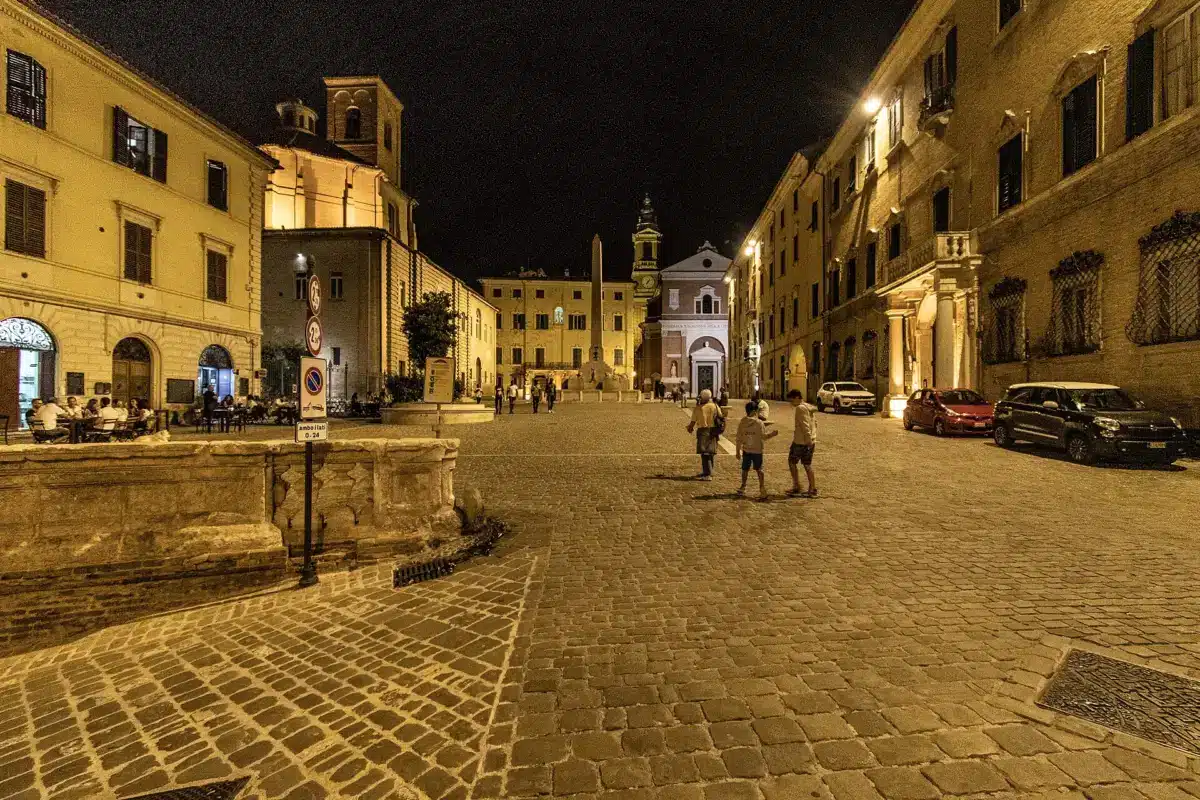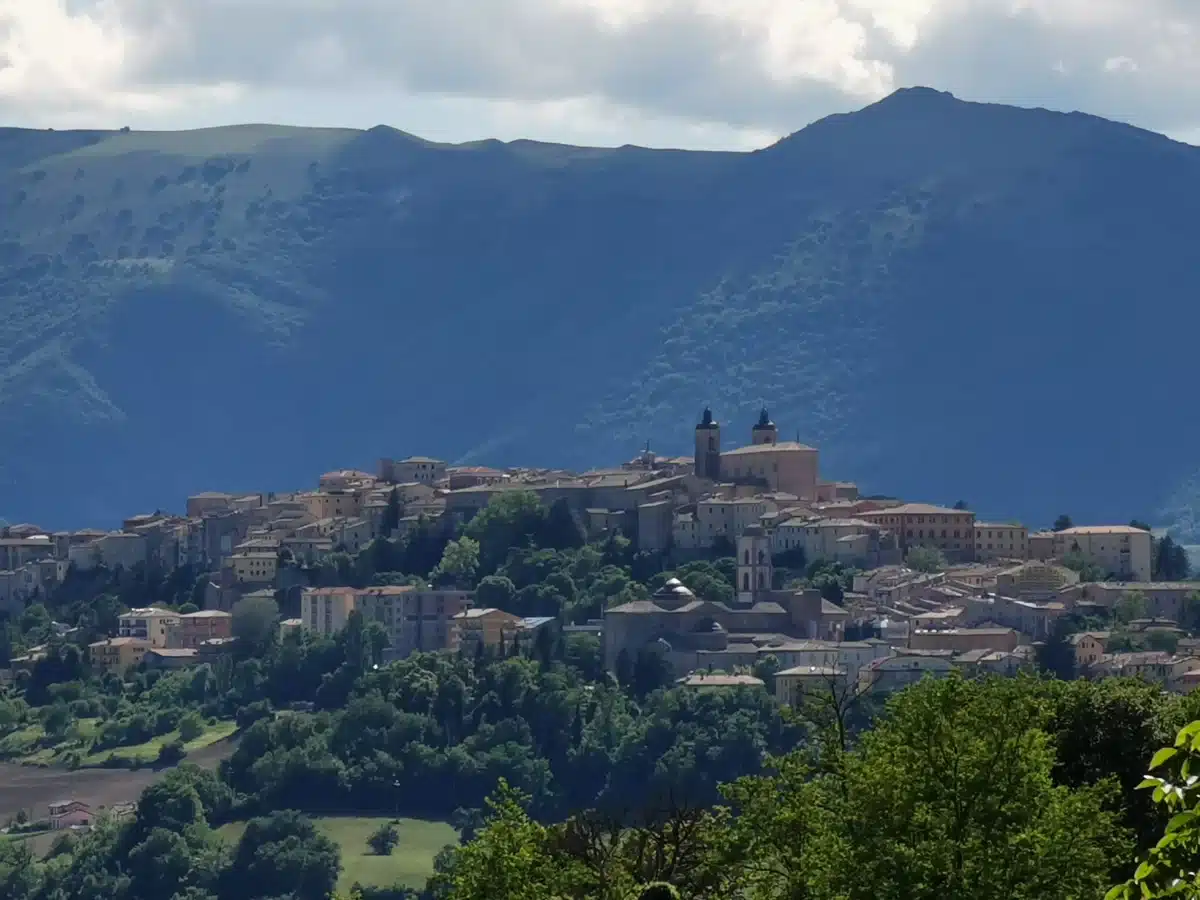

Fermo is a hilltop city and provincial capital in southern Marche, on Sabulo hill about 6 km from the Adriatic Sea. It is worth visiting for its Roman Cisterns, among the largest the Romans ever built, the arcaded Piazza del Popolo, a library room with a giant 1713 globe and sea views from the cathedral hill.
Fermo: key facts
- Region and province: Marche, capital of the province of Fermo, 320 meters up on Sabulo hill and 6 km from the sea (Visit Fermo)
- From Ancona: direct trains on the Adriatic line to Porto San Giorgio-Fermo station, the fastest in about 32 minutes (Trainline timetable), then a bus up to Fermo every 30 minutes (Visit Fermo)
- From Rome: a little over 4 hours by the frecciaRoma coach from Rome Tiburtina or Fiumicino airport (frecciaRoma)
- Best for: Roman engineering, Renaissance squares, a historic library and theater, and an easy mix of hill town and beach
- How long to spend: one full day for the town, two or three days with Torre di Palme and the coast
Fermo rarely makes the first list of Italy trips, and that is exactly why it deserves a place on yours. You get a proud old city with real local life, brick lanes that open onto glimpses of the sea, and one of the most impressive Roman monuments in central Italy underneath your feet. We live in Marche and design private Marche tours, and Fermo is an easy fit when you want to see the south of the region.
Where is Fermo, Italy?
Fermo is in southern Marche, on the east side of Italy facing the Adriatic. According to Italia.it, the city spreads over a steep hillside between the Ete Vivo and Tenna valleys, just 7 km from the sea, and is dominated by its cathedral.
One point that confuses many travelers: Fermo is not a seaside town, even if some booking sites call it one. The historic center sits on the hill. The municipality also reaches down to the coast, where its beaches are Lido di Fermo, Lido di San Tommaso, Casabianca and Marina Palmense (Visit Fermo). The city has deep roots: it became an important Roman colony in 264 BC under the name Firmum Picenum (Visit Fermo).
Is Fermo worth visiting?
Yes. Fermo combines a major Roman site, one of the finest squares in Marche, a remarkable library and an 18th-century theater in a compact, walkable center.
What strikes most visitors first is the atmosphere: terracotta lanes, noble palaces and views that jump from the Sibillini Mountains to the sea. It is a working provincial capital rather than a museum town, so the cafés and shops along its lanes are full of locals.
What to see in Fermo
The main sights are close together between Piazza del Popolo and Girfalco hill. This table sums them up; details follow below.
| Sight | What it is | Time needed | Our tip |
|---|---|---|---|
| Piazza del Popolo | The arcaded main square, 135 m long, lined with 16th-century brick loggias | 30 minutes | Come back for an evening drink under the arcades |
| Palazzo dei Priori and the Globe Room | Civic art gallery with a Rubens, plus the library room with a 1713 wooden globe | 1.5 hours | Closed on Mondays from mid-September to mid-June |
| Roman Cisterns | 30 underground vaulted rooms covering 2,200 square meters | 45 minutes | In the low season, weekday visits are by guided tour at 11 am and 4 pm only |
| Cathedral and Girfalco | Romanesque-Gothic cathedral on the highest point of town, with a park and sea views | 1 hour | Go down to the crypt and the early Christian remains |
| Teatro dell’Aquila | One of the largest historic theaters in Marche | 45 minutes with a tour | Tours are arranged through the museum information point |
| Torre di Palme | Medieval village above the sea, part of the municipality | Half a day | Time it for sunset at the belvedere |
Piazza del Popolo
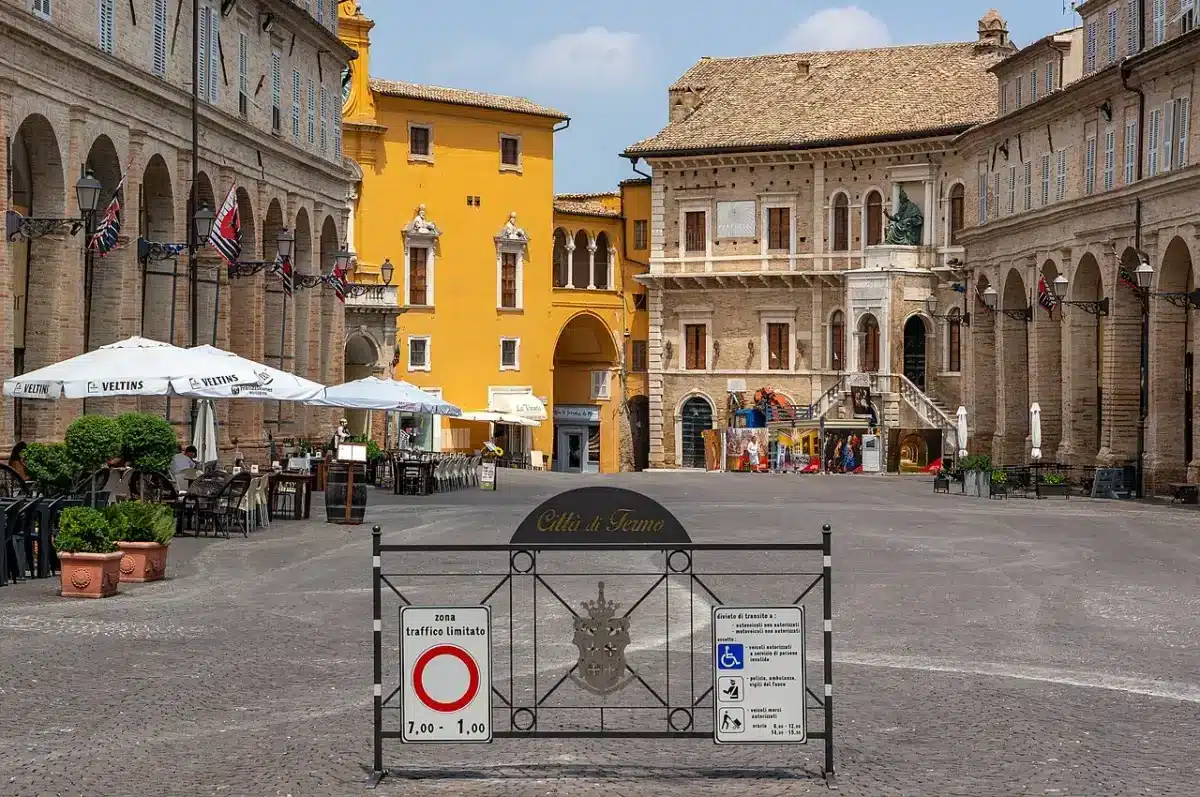
Piazza del Popolo is the heart of Fermo. Its current look comes from works that began in 1569, when the two long brick loggias were built, and the square took its final shape in 1659. Today it measures 135 meters by 34 and is closed on its short sides by Palazzo dei Priori and the Apostolic Palace (Visit Fermo). A hanging loggia with frescoed ceilings, built in 1581, links Palazzo dei Priori to Palazzo degli Studi, and every Thursday night in July and August the square fills with a handicraft and antiques market.
Palazzo dei Priori and the Globe Room
The statue of Pope Sixtus V, made in 1588, watches over the square from the facade of Palazzo dei Priori; he had been Bishop of Fermo from 1571 to 1577. Inside is the city’s main museum complex, with painted rooms and the civic art gallery, whose star is Rubens’ Adoration of the Shepherds (Fermo Musei).
Do not leave without seeing the Globe Room, the oldest room of the Romolo Spezioli Civic Library. It is lined with walnut shelving on two levels and holds the large globe designed in 1713 by the abbot Amanzio Moroncelli, 1.85 meters in diameter and covered in Fabriano paper. The library preserves about 300,000 books, including 681 incunabula (Visit Fermo).
From 15 September to 15 June, Palazzo dei Priori is closed on Mondays and open Tuesday to Friday from 10:30 am to 1 pm and 3:30 to 6 pm, and on weekends until 7 pm. From 16 June to 15 September it opens every day from 10 am to 1 pm and 4 to 8 pm. A ticket for a single site costs €4, a circuit ticket valid for one year covers the city museums, and children up to 13 enter free (official hours and tickets).
The Roman Cisterns
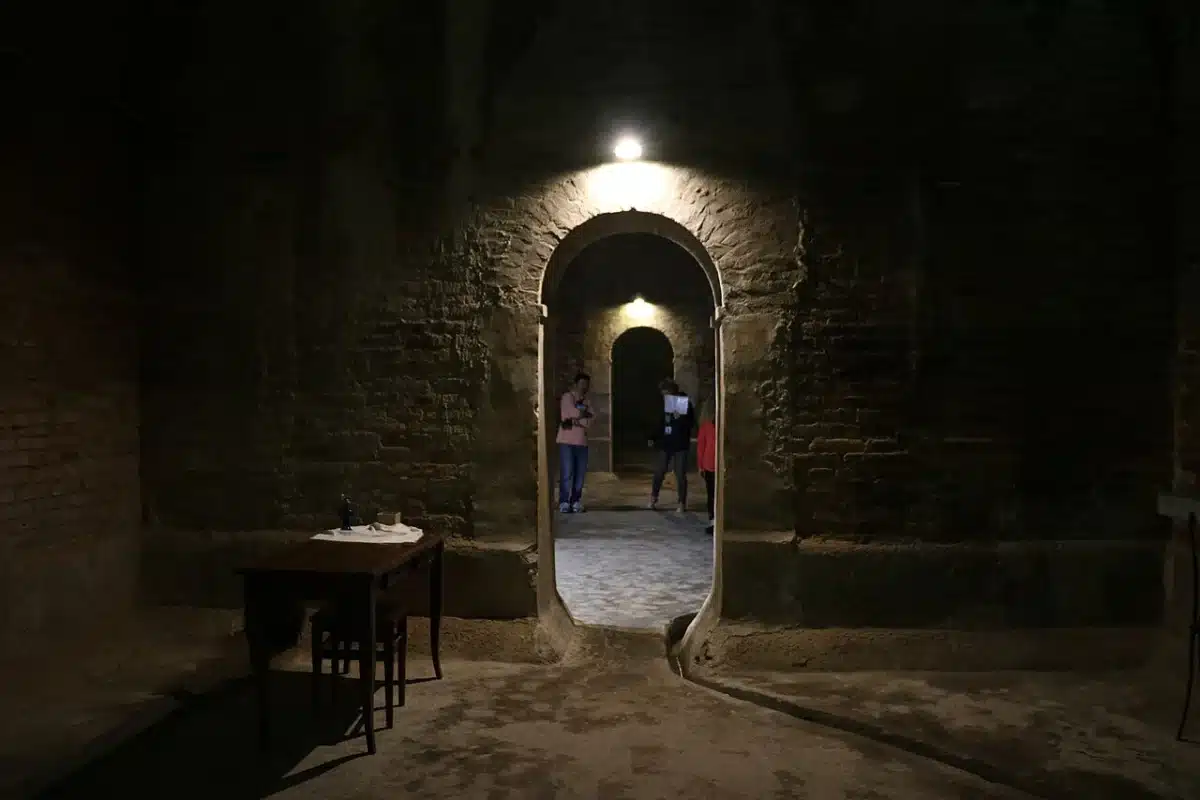
The Roman Cisterns are the reason many people come to Fermo. Built in the 1st century AD to store drinking water for the city, they consist of 30 rooms in three rows, for a total of 2,200 square meters, and they are unique in Marche (Fermo Musei). The city’s tourism office calls them the largest ever built by the Romans in terms of surface area (Visit Fermo). Walking through the long, cool vaulted halls is a real surprise after the sunny squares above.
Plan your timing carefully, because opening hours change a lot with the season. From 16 September to 15 June the cisterns are closed on Mondays, open Tuesday to Friday only for guided tours at 11 am and 4 pm, and open on Saturday and Sunday from 10:30 am to 1 pm and 3:30 to 7 pm. From 16 June to 15 September they open every day from 10 am to 1 pm and 3 to 7 pm. Visits start from the city’s Archaeological Museum, and information boards are available in English (Fermo Musei).
Fermo Cathedral and Girfalco hill
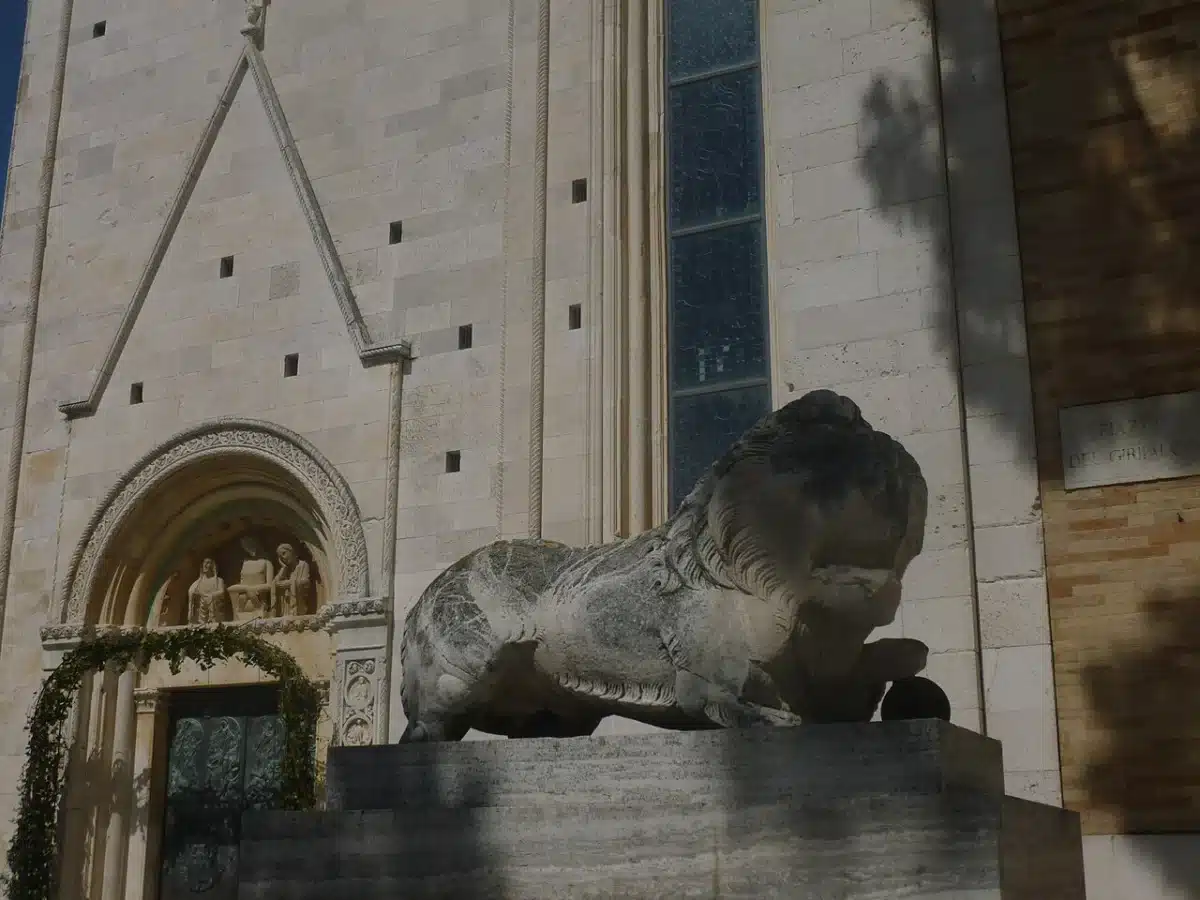
From Piazza del Popolo, walk up to Girfalco, the top of the hill, for the Metropolitan Cathedral of Santa Maria Assunta. The earlier church was destroyed in 1176 by the troops of Frederick Barbarossa, and the new one was completed in 1227 by the architect Giorgio da Como. The asymmetric Romanesque-Gothic facade in Istrian stone is original, while the interior was rebuilt in neoclassical style in 1781 to a design by Cosimo Morelli (Visit Fermo). Below, you can visit the foundations of a 6th-century early Christian basilica and a crypt with a 3rd to 4th-century sarcophagus.
In the winter months the cathedral is open from Tuesday afternoon to Saturday, 10 am to 12:30 pm and 3 to 6 pm, and on Sunday from 10 am to 1 pm and 3 to 6 pm; in summer the afternoon opening runs to 7:30 pm. The park around it is the place for the views of the sea that Italia.it praises, so bring your camera. Next door, the Diocesan Museum keeps the chasuble of Thomas Becket (Visit Fermo).
Teatro dell’Aquila
The Teatro dell’Aquila is one of the largest theaters in Marche. It was built at the end of the 18th century to a 1780 design by Cosimo Morelli, replacing an old wooden theater inside Palazzo dei Priori, and takes its name from the eagle, the symbol of the city (Visit Fermo). It still runs a full season of opera, concerts and prose, and the 2026/2027 season is on the calendar. Guided visits are arranged through the museum information point on Piazza del Popolo (Fermo Musei).
Want to see Fermo as part of a private Marche trip? We can book a private guide for the cisterns and the Globe Room, plan a long lunch of local pasta and end the day with sunset in Torre di Palme, all at your pace. See our private Marche tours.
How to spend one day in Fermo
Outside summer, a Saturday or Sunday works best for this plan, because the cisterns are open all morning and afternoon instead of only for two weekday tours.
- 10 am: coffee under the arcades of Piazza del Popolo and a first look at the square.
- 10:30 am: the Roman Cisterns, about 45 minutes underground.
- 11:30 am: Palazzo dei Priori, the Rubens and the Globe Room, before the 1 pm closing.
- 1 pm: lunch with a plate of maccheroncini di Campofilone.
- 3 pm: walk up through the terracotta lanes to Girfalco, the cathedral and the crypt.
- 4:30 pm: stroll along Via Mazzini past the Teatro dell’Aquila and the noble palaces of Corso Cefalonia.
- Sunset: drive about 15 minutes to Torre di Palme for the view from the belvedere and dinner in the village.
What food is Fermo known for?
The signature dish of the area is maccheroncini di Campofilone, very thin strands of egg pasta from the village of Campofilone in the province of Fermo, protected as a PGI product and usually served with a meat sauce (Italia.it).
Around Fermo you will also find the classics of Marche cooking, as listed by Italia.it:
- Vincisgrassi: the Marche version of lasagna, with layers of pasta, béchamel and a rich meat sauce
- Ciauscolo: a soft, spreadable PGI salami
- Fried olives: stuffed with meat, breaded and fried
- Maccheroncini di Campofilone: the local egg pasta; Campofilone celebrates it with a festival every year in early August
Fermo is also home to Tipicità, the festival that has grown into an umbrella brand for high-quality Made in Marche food, wine and know-how (Visit Fermo). For restaurants, the tourism office keeps an up-to-date where to eat list, from trattorias to farm restaurants. If food is the heart of your trip, have a look at our Italy food and wine tours.
How to get to Fermo
The easiest way is by car or private transfer, but Fermo is also reachable by train plus a short bus ride. These are the official routes from Visit Fermo:
- By car: take the A14 Bologna to Canosa motorway and exit at Porto San Giorgio-Fermo, or follow the SS16 coast road from Porto San Giorgio toward Fermo. The city lists its car parks on the parking page.
- By train: the nearest station is Fermo-Porto San Giorgio on the Adriatic railway, with a bus line up to Fermo every 30 minutes. Check train times on Trenitalia.
- By plane: the nearest airport is Marche airport “Raffaello Sanzio” at Falconara Marittima, near Ancona.
- From Rome: the frecciaRoma coach links Fermo with Rome Tiburtina and Fiumicino airport in a little over 4 hours (frecciaRoma).
Fermo itself is walkable, but the villages and beaches around it are spread out over the hills and along the coast. On our trips, our own drivers take you there, so nobody has to worry about parking in the old town. If you plan to travel by public transport, read how to spend two weeks in Marche without a car.
When is the best time to visit Fermo?
Late spring and September are ideal, with mild weather and long opening hours, while summer is the liveliest season and autumn the quietest. Each season has its own reason to come.
Summer: from mid-June to mid-September the cisterns and Palazzo dei Priori open every day, and in July and August Palazzo dei Priori also opens on Thursday evenings from 9 pm to midnight (Fermo Musei). The highlight is the Cavalcata dell’Assunta, which reproduces the procession, religious celebrations and tournaments linked to the feast of the Assumption since 1182. Ten contrade, six from the historic center and four from outside the walls, compete for the Palio on 15 August (Cavalcata dell’Assunta), and the 2026 program ran events from May through August (official program).
Autumn: the town is calm and the light is beautiful. If you are here before 1 November 2026, the exhibition “Frida Kahlo and Marilyn Monroe, parallel lives” is on at the city museums (Fermo Musei).
Winter: Fermo Magica turns the center into a Christmas village; the last edition ran from 6 December 2025 to 6 January 2026, with an ice rink on Piazza del Popolo and Christmas markets (Visit Fermo). Check the city’s events calendar for this year’s dates.
What is near Fermo?
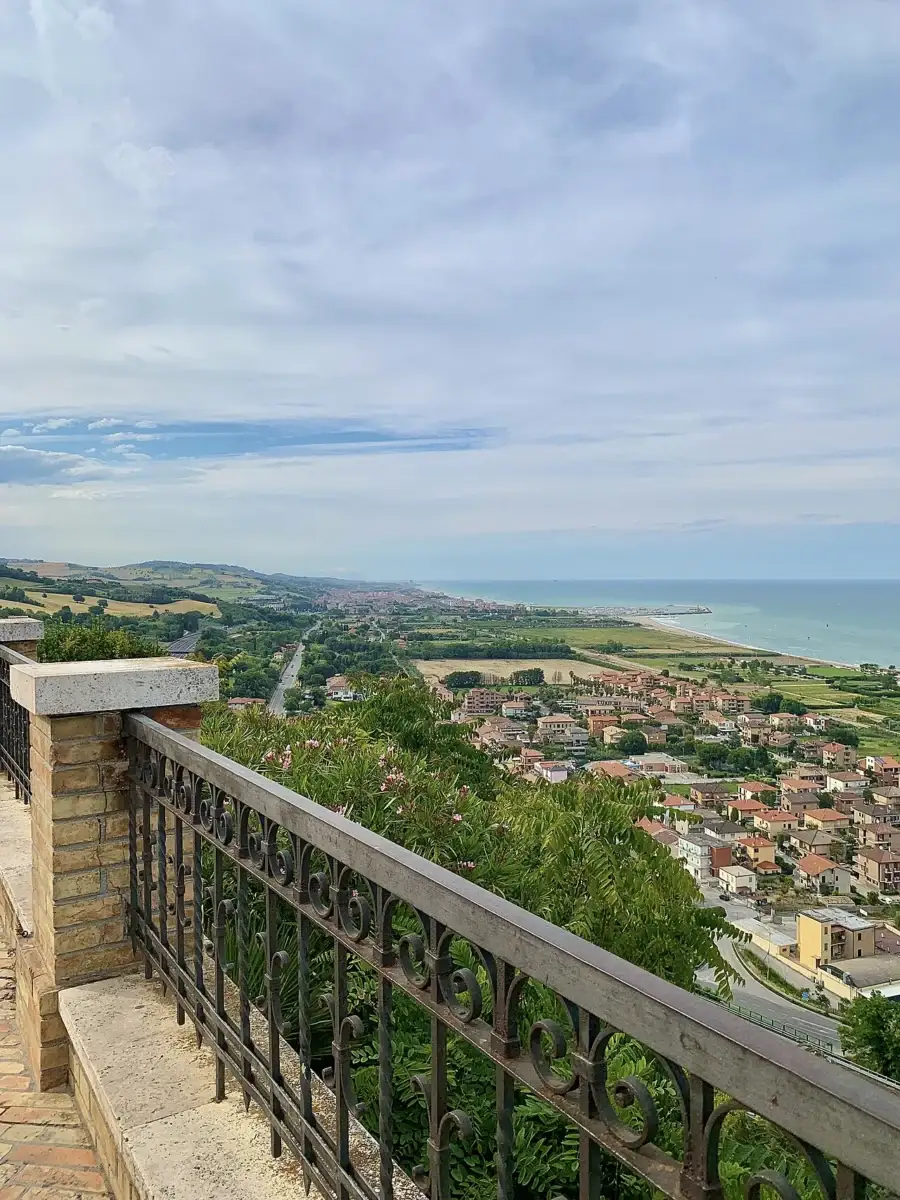
The first place to add is Torre di Palme, one of the “Borghi più belli d’Italia”, about 12 km and 15 minutes by car from the center of Fermo. Its brick lanes lead to the Romanesque-Gothic church of Santa Maria a Mare, a crenellated tower from the time of Frederick II and a panoramic balcony over the sea, and just below the village is the Bosco del Cugnolo, a protected patch of Mediterranean woodland (Visit Fermo).
For the beach, head down to Lido di Fermo, Casabianca or Marina Palmense. Further south, Ascoli Piceno makes a natural pairing for a second art city. Inland lie the Sibillini Mountains and university towns like Camerino, close to where we live.
In a Marche itinerary, Fermo works best as the southern stop of the trip, two or three nights between the Conero Riviera and Ascoli Piceno. Our guide to the most beautiful towns to visit in Le Marche helps you choose the other stops, and how many days to spend in Le Marche helps you plan the pace.
Frequently asked questions about Fermo
Is Fermo, Italy worth visiting?
Yes. Fermo has one of the largest Roman cistern systems ever built, the arcaded Piazza del Popolo, the Globe Room with its 1713 wooden globe, a Rubens in the civic art gallery and the Teatro dell’Aquila, all in a compact center with views of the Adriatic.
Where is Fermo in Italy?
Fermo is in southern Marche, on the Adriatic side of central Italy. It is the capital of the province of Fermo and stands on Sabulo hill, 320 meters above sea level and about 6 km from the sea.
Is Fermo on the coast?
The historic center is on a hill a few kilometers inland, but the municipality reaches the Adriatic, with the beaches of Lido di Fermo, Lido di San Tommaso, Casabianca and Marina Palmense.
What are the opening hours of the Roman Cisterns of Fermo?
From 16 September to 15 June they are closed on Mondays, open Tuesday to Friday for guided tours at 11 am and 4 pm, and open on weekends from 10:30 am to 1 pm and 3:30 to 7 pm. From 16 June to 15 September they open daily from 10 am to 1 pm and 3 to 7 pm.
How do I get to Fermo from Rome?
The frecciaRoma coach connects Rome Tiburtina and Fiumicino airport with Fermo in a little over 4 hours. By train, travel to Porto San Giorgio-Fermo station on the Adriatic line and take the bus up to town, which runs every 30 minutes.
How long should I spend in Fermo?
One full day covers the cisterns, Palazzo dei Priori, the cathedral and the old town. Stay two or three days to add Torre di Palme, the beaches and a day trip to Ascoli Piceno.
Plan your visit to Fermo with locals
Sweet Life Italy is a certified incoming tour operator of the Marche Region, based in Castelraimondo and founded by Marco and Ilaria, who live in Marche. We design private, tailor-made trips for 1 to 7 guests across Marche and the rest of Italy, with licensed guides, local food experiences and our own drivers, and we bring more than 13 years in luxury tourism to every itinerary. Fermo can be one memorable day of a wider private Marche tour or part of one of our private luxury tours of Italy.
Tell us about your trip and we will start with a free video call. After that we send a day-by-day proposal and a free first estimate. Please allow at least 8 weeks before your travel dates.
Featured photo: Piazza del Popolo and Palazzo dei Priori in Fermo, by Verdenex84 via Wikimedia Commons, CC BY-SA 4.0.