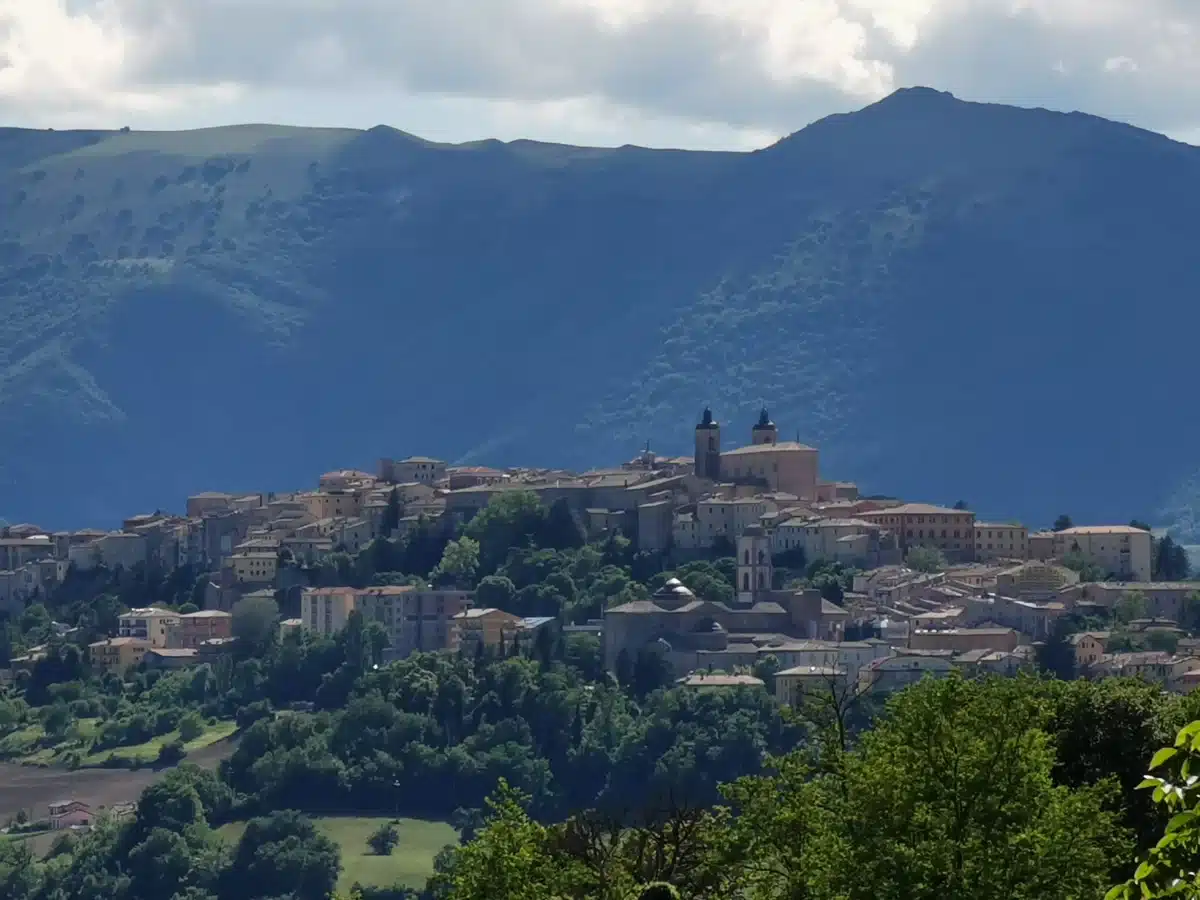
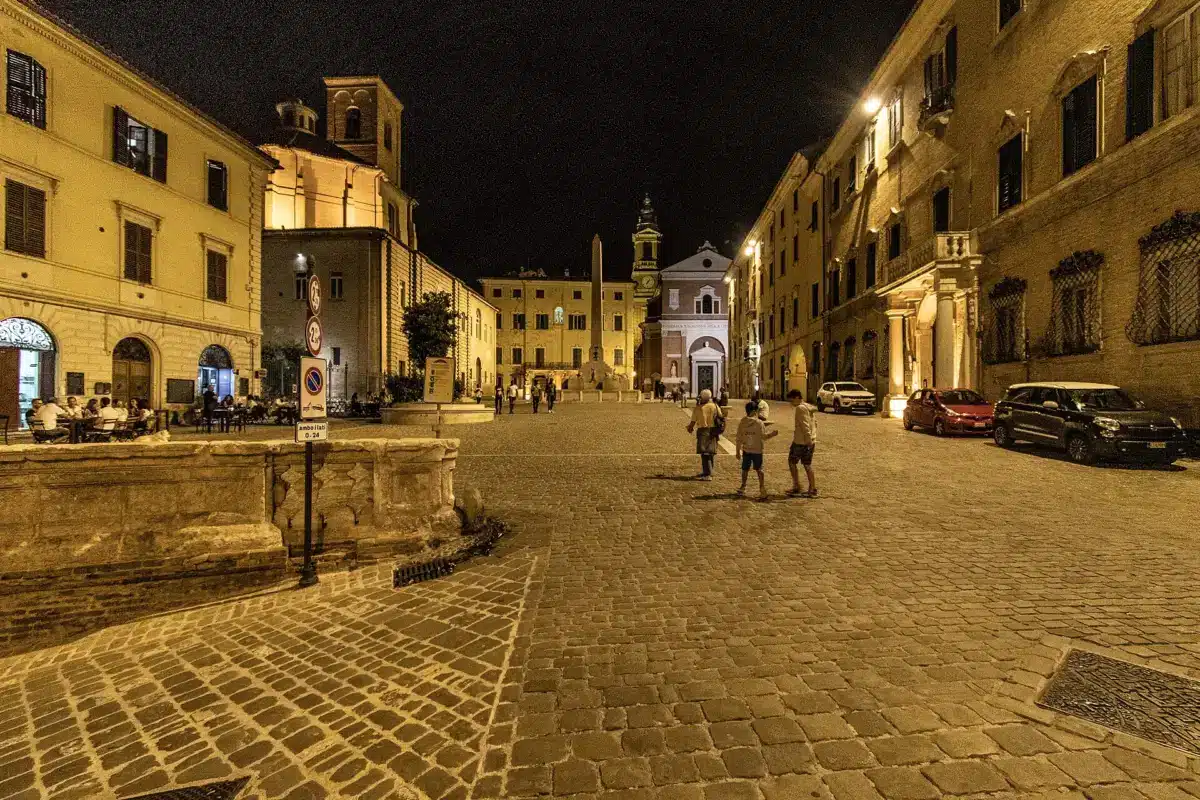
Jesi is a walled hill town in the province of Ancona, in central Marche, about 30 km inland from the Adriatic port of Ancona. It is the birthplace of Emperor Frederick II and the capital of Verdicchio wine country, and it is worth visiting for its Lorenzo Lotto paintings, its opera house and an easy, walkable historic center.
Jesi: key facts
- Region and province: Marche, province of Ancona, on a hill in the lower Esino valley (Italia.it)
- From Ancona: about 30 km, or 25 minutes by train; Marche airport at Falconara is 11 minutes away by train (Palazzo Pianetti Civic Museums)
- From Rome: about 3 hours by train on the Rome to Ancona line (Palazzo Pianetti Civic Museums)
- Best for: Verdicchio tastings, Renaissance art by Lorenzo Lotto, opera at the Teatro Pergolesi and a compact medieval center inside brick walls
- How long to spend: one full day for the town, two or three days if you use it as a base for the Castelli di Jesi wine villages
Most travelers drive past Jesi, Marche, on the way from Ancona to Rome, and that is a mistake. It is one of the towns we love to show guests who want Marche without the crowds: real local life, a beautiful 18th-century theater, great art and some of Italy’s best white wine growing on the hills all around. If you would like to see it as part of a trip, we design private Marche tours around towns like this one.
Where is Jesi, Italy?
Jesi is in central Marche, in the province of Ancona, on the east side of Italy facing the Adriatic. According to Italia.it, the town stands on a hill in the lower valley of the Esino river, a few kilometers from Ancona.
The valley around it is called the Vallesina. Its hills are covered with vineyards and olive groves and crowned by fortified villages, the Castelli di Jesi, that gave the local wine its name (Turismo Jesi). That makes Jesi a natural hub: the sea, the Conero Riviera and the hill towns of inland Marche are all within easy reach.
Is Jesi, Italy worth visiting?
Yes. Jesi packs a lot into a small center: a perfectly preserved ring of walls, five works by Lorenzo Lotto, a museum dedicated to Frederick II and a historic opera house that joined the UNESCO World Heritage list in 2026.
It is also a lively working town rather than a postcard village, so you will share the squares with locals at the market and in the cafés. What surprises our guests most is the depth of culture here: two great composers, Giovanni Battista Pergolesi and Gaspare Spontini, were born in Jesi and nearby Maiolati, and the town still runs a full opera season every autumn.
What to see in Jesi
The historic center is small enough to see on foot in a day. This table sums up the main sights; details follow below.
| Sight | What it is | Time needed | Our tip |
|---|---|---|---|
| Piazza Federico II | The long square on the site of the Roman forum, where Frederick II was born | 20 minutes | Come back in the evening, when the square is lit |
| Museo Federico II Stupor Mundi | Interactive museum on the emperor’s life in Palazzo Ghislieri | 1 to 1.5 hours | From mid-September to May it opens only Friday afternoon and weekends |
| Palazzo Pianetti | Civic museums with a rococo stucco gallery and five works by Lorenzo Lotto | 1.5 hours | Closed on Mondays from September to June |
| Teatro Pergolesi | The 1798 opera house on Piazza della Repubblica, UNESCO-listed since 2026 | 1 hour with a tour | Guided visits are by appointment; better still, see an opera |
| City walls | 1.5 km of medieval brick walls with towers and four surviving gates | 45 minutes | Walk through the Pusterla passage inside Palazzo Battaglia |
| Palazzo della Signoria and Piazza Colocci | The old seat of town government, with the historic library rooms | 20 minutes | Included in the Jesi Museum Pass |
| Ripa Bianca Reserve | A 310-hectare nature reserve on the Esino river | 2 hours | Bring binoculars for the heron colony |
Piazza Federico II and the Frederick II museum
Piazza Federico II was built on the site of the ancient Roman forum and is overlooked by the Cathedral of San Settimio, the rococo Palazzo Balleani and the elegant Palazzo Ripanti (Italia.it). This is where the town’s most famous story happened: in December 1194, Constance of Hauteville stopped in Jesi on her way to Sicily and on 26 December gave birth to the future Holy Roman Emperor Frederick II, by tradition under a tent in this square, in front of the town’s authorities (Turismo Jesi).
On the square, the Museo Federico II Stupor Mundi in Palazzo Ghislieri tells his life in sixteen themed rooms with interactive installations, 3D animations and reconstructions of his castles. From mid-September to May it opens on Friday from 3 to 8 pm and on Saturday and Sunday from 10 am to 8 pm, and a full ticket costs €7.
Palazzo Pianetti and Lorenzo Lotto
Palazzo Pianetti on Via XV Settembre houses the town’s civic museums: an archaeological museum, the civic art gallery with a long rococo stucco gallery, and a contemporary art gallery. The highlight is Lorenzo Lotto. On the first floor you can see his Deposition, the St. Lucy Altarpiece, the two small Annunciation panels, the Madonna of the Roses and the Visitation (Turismo Jesi). Lotto was in Jesi by October 1511, when he signed the contract for the Deposition.
From 1 September to 30 June the museums are closed on Mondays and open Tuesday to Sunday from 10 am to 1 pm and 4 to 7 pm. Tickets are €5 for one museum or €8 for all three, and the €15 Jesi Museum Pass covers nine sites in town for a year (official opening hours and tickets).
Teatro Pergolesi, a UNESCO opera house
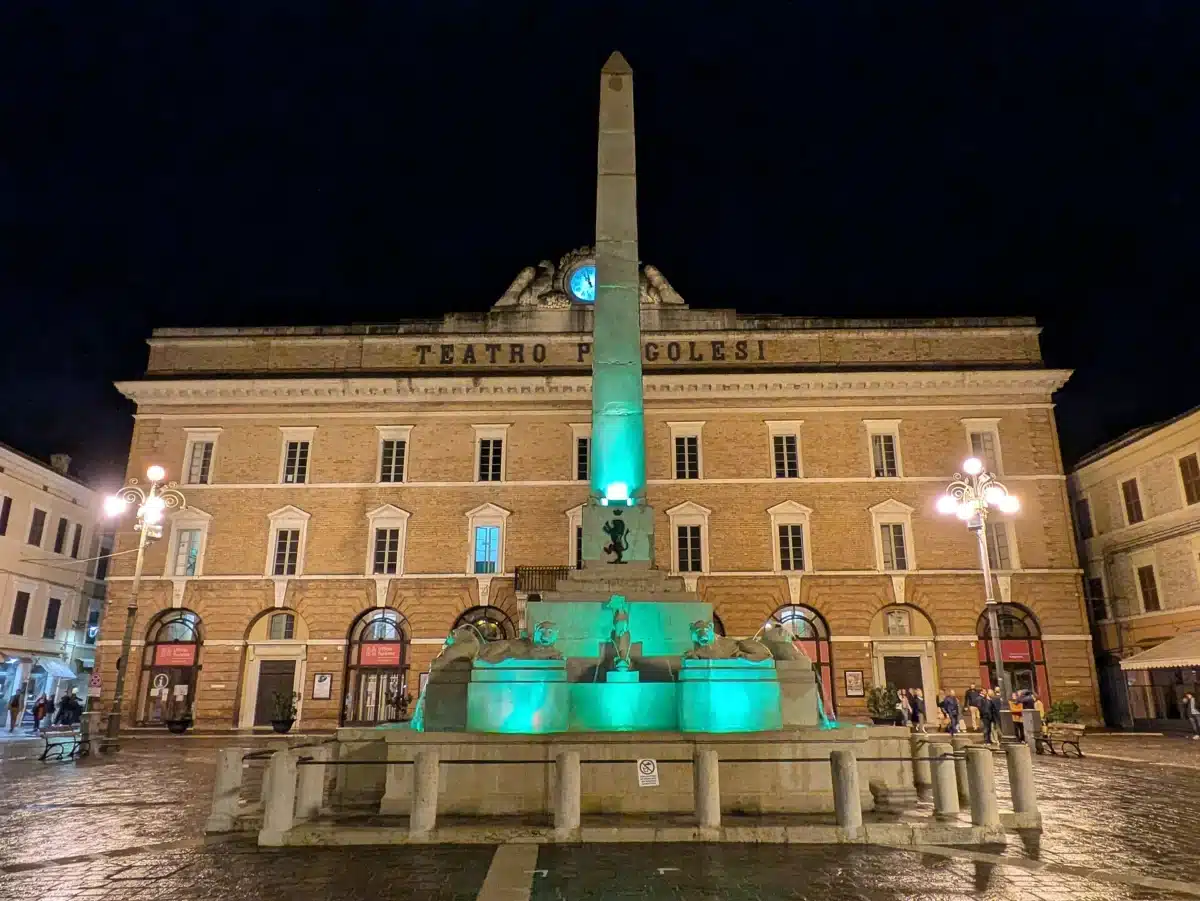
The Teatro Pergolesi opened in 1798 as the “Teatro della Concordia”, paid for by the town’s noble families, and took the name of the composer Giovanni Battista Pergolesi, born in Jesi in 1710, in 1883 (Comune di Jesi). Its oval hall has three tiers of boxes plus the gallery, and the foyer holds small exhibitions on Pergolesi and Gaspare Spontini. In 1968 it became the first “Teatro di Tradizione” in Marche.
The big news is recent: since July 2026 the theater is part of UNESCO World Heritage, included in the “system of condominium-style Italian theaters of central Italy from the 18th and 19th centuries” (Fondazione Pergolesi Spontini). Guided tours take you backstage and into the composers’ rooms; the town lists visits on weekdays by appointment. You can read more about the historic theaters of Marche in our dedicated post.
The city walls
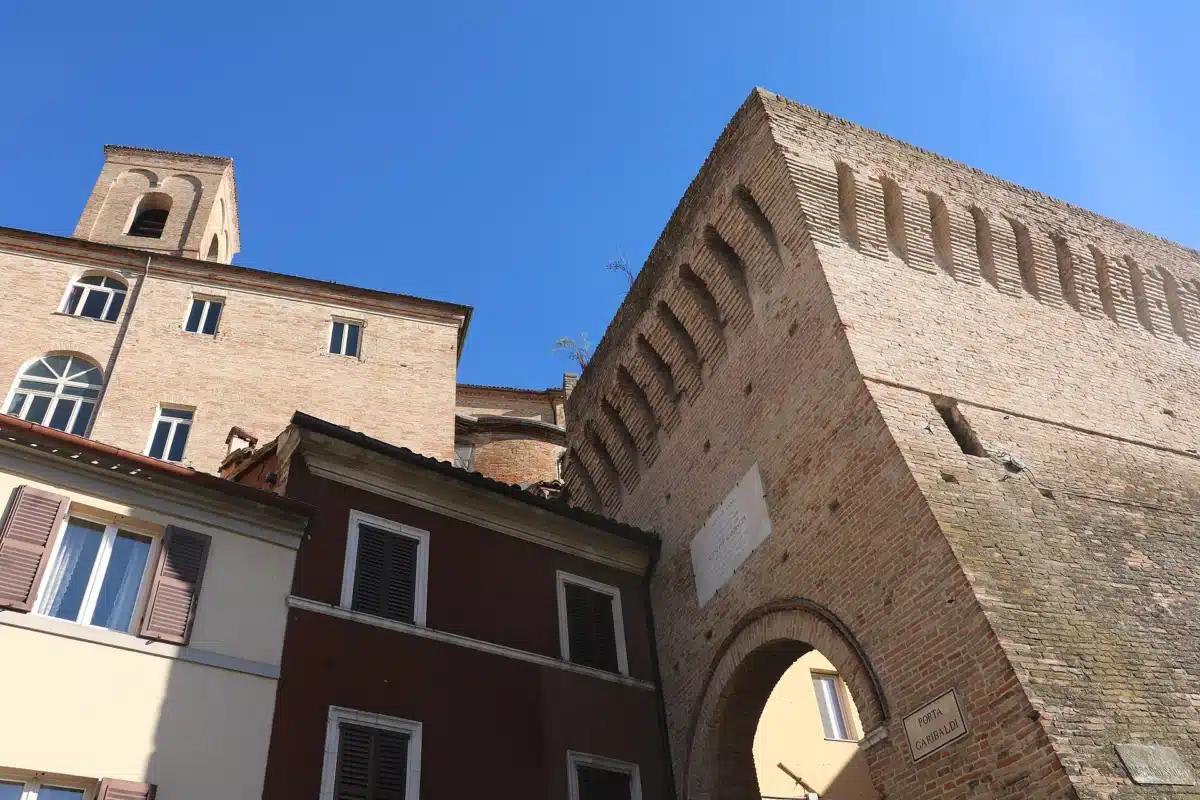
Jesi’s walls are one of the finest examples in the region. They run for one and a half kilometers around the medieval town, date from the 13th and 14th centuries and were renovated at the end of the 15th century by the Florentine military architect Baccio Pontelli (Turismo Jesi). Built entirely of brick, they keep their towers, arrow slits and four main gates. Do not miss the Pusterla, a public passage inside Palazzo Battaglia that takes you into the heart of the walls, between Via Federico Conti and the covered market.
Palazzo della Signoria and Piazza Colocci
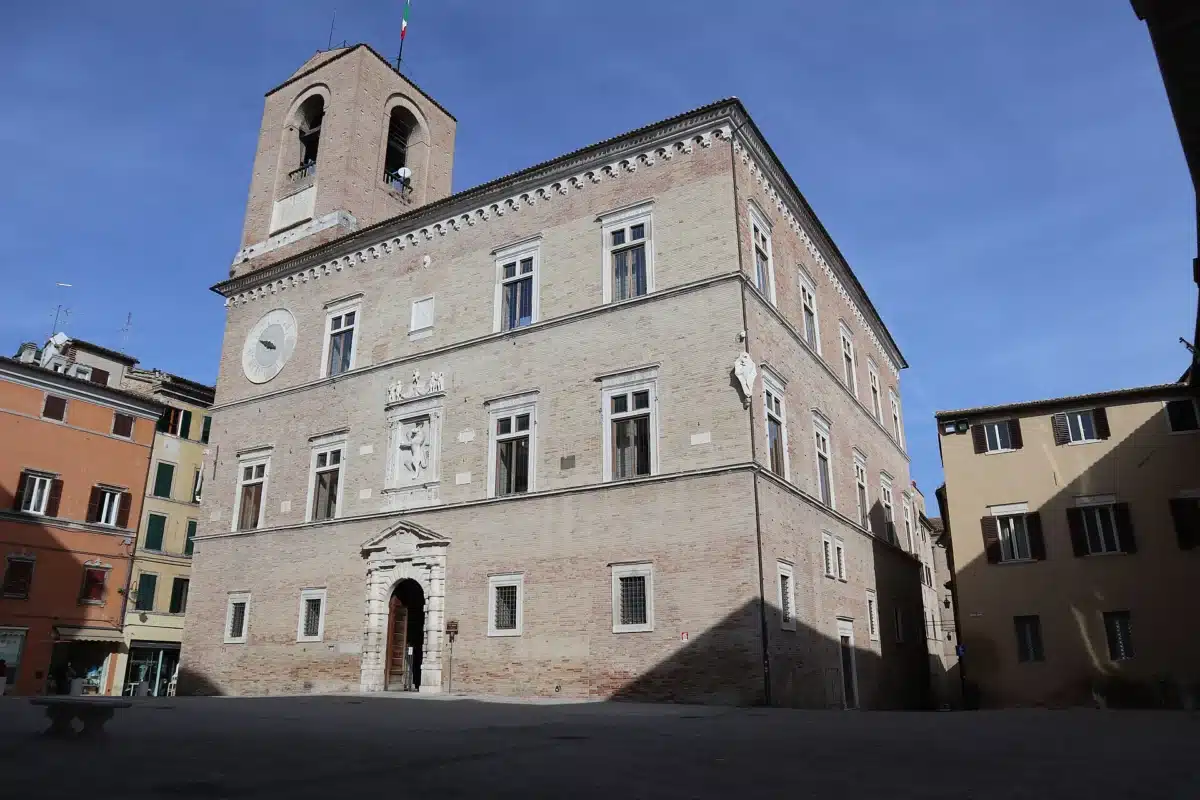
A short walk from Piazza Federico II, Piazza Colocci is framed by Palazzo della Signoria, Palazzo Colocci Vespucci and Palazzo Bisaccioni (Italia.it). The rooms of the old and rare book collection in Palazzo della Signoria, the Colocci-Vespucci House Museum and the exhibition halls of Palazzo Bisaccioni are all part of the Jesi Museum Pass.
Ripa Bianca Nature Reserve
At the eastern edge of town, the Ripa Bianca Reserve covers 310 hectares along the Esino river, with wetlands, a lake, farmland and gullies. The lake is home to the most important heron nesting site in Marche, which you can watch from birdwatching stations. Check the reserve’s website for opening times and guided walks.
Want to see Jesi as part of a private Marche trip? We can plan a day here around Lotto, the theater and a long lunch, then take you to a family winery in the Castelli di Jesi for a Verdicchio tasting with the winemaker. See our private Marche tours.
How to spend one day in Jesi
Saturday is the best day for this plan, because the market is on, the Frederick II museum is open all day and the food and wine institute opens in the morning.
- 8:30 am: coffee and the weekly market, which runs on Wednesday and Saturday mornings from Piazza della Repubblica to Piazza Federico II (Turismo Jesi). Admire the Teatro Pergolesi and the Fontana dei Leoni on your way.
- 10 am: Palazzo Pianetti for the stucco gallery and the Lotto paintings.
- 11:30 am: the Marche Institute of Food and Wine in Palazzo Balleani Vecchio, a multimedia introduction to Verdicchio and Marche products, open Thursday to Saturday from 10 am to 1 pm.
- 1 pm: a long lunch with a glass of Verdicchio dei Castelli di Jesi.
- 3 pm: Piazza Federico II, the cathedral and the Frederick II museum.
- 5 pm: walk the walls and the Pusterla passage, then head out to a winery in the hills or to Ripa Bianca for the herons.
- Evening: if your dates fall in the opera season, finish with a performance at the Teatro Pergolesi.
Why is Jesi called the home of Verdicchio?
Because Verdicchio dei Castelli di Jesi, the wine the town calls the symbol and ambassador of its territory, is named after the town and the fortified villages around it. The wine consortium, which is based in Jesi, explains that the name comes from the green color (“verde”) of the grapes, even when fully ripe (Istituto Marchigiano di Tutela Vini).
Verdicchio dei Castelli di Jesi became a DOC on 26 September 1968. It is made with at least 85% Verdicchio grapes grown in 23 towns of the province of Ancona and 2 of the province of Macerata; “Classico” is reserved for the oldest area, and there are also sparkling and passito versions. Its ability to age earned the Castelli di Jesi Verdicchio Riserva DOCG in 2010, a wine aged for 18 months, six of them in bottle.
For tastings, head into the Vallesina. Cupramontana is known as the capital of Verdicchio and celebrates the harvest with its Sagra dell’Uva, while Morro d’Alba, a village wrapped in arcaded walls, makes the red Lacrima di Morro d’Alba. If wine is the heart of your trip, have a look at our Italy food and wine tours.
What food is Jesi known for, and where to eat?
Jesi’s table is the food of the Vallesina: simple, generous and made to go with Verdicchio. The town’s tourism office lists the local specialties worth taking home:
- Lonza di fico: a “salami” of dried figs, walnuts, almonds and sapa (cooked grape must)
- Cavallucci: biscuits filled with dried fruit
- Pizza al formaggio: a savory cheese bread shaped like a panettone
- Visciola wine: a sweet drink made by fermenting wild cherries in red wine
- Wines: Verdicchio dei Castelli di Jesi and Lacrima di Morro d’Alba
For restaurants and trattorias, the official where to eat page lists places in the center and the surrounding area. When we plan a day here for guests, we book lunch ahead, especially on market days and opera nights.
How to get to Jesi
Jesi is one of the easiest Marche towns to reach without a car, because it sits on the main Rome to Ancona railway. The details below come from the Palazzo Pianetti museums and the town’s tourism site.
- By train from Ancona: about 25 minutes. Jesi station is about a 10-minute walk from Palazzo Pianetti. Check times on Trenitalia.
- By train from Rome: about 3 hours on the Rome to Ancona line.
- From the airport: Marche airport at Ancona-Falconara is 15 km away. Castelferretti-Falconara Aeroporto station is 300 meters from the arrivals terminal, and the train to Jesi takes about 11 minutes.
- By car: leave the A14 at Ancona Nord-Jesi, then take the SS76 toward Rome and exit at Jesi Est, Jesi Centro or Jesi Ovest. There are free car parks around the center, including the covered Mercantini car park on Viale della Vittoria.
Trains bring you to the town, but the wine villages of the Castelli di Jesi are spread across the hills and poorly served by public transport. On our trips, our own drivers take you there, so everyone can enjoy the tastings. If you are planning Marche without a rental car, read how to spend two weeks in Marche without a car.
When is the best time to visit Jesi?
Late spring and early autumn are the best times to visit Jesi: the weather is mild, the vineyards are green or full of grapes, and the town’s music season is in full swing from July to December.
In 2026 the Pergolesi Spontini Festival ran from 18 July to 21 September with concerts in Jesi and the villages around it, including wine concerts. The opera season at the Teatro Pergolesi runs until 19 December, and there are still dates left this year: Donizetti’s Don Pasquale on 30 and 31 October, the world premiere of L’Esecuzione on 14 and 15 November, Verdi’s Nabucco on 11 and 13 December and the flamenco show Querencia on 19 December (Stagione Lirica di Tradizione). Seats in the gallery start at €15 for the main operas, according to the official ticket page, and all subscription operas have surtitles.
The town’s patron saint is celebrated on 22 September, when the civic museums at Palazzo Pianetti are closed, and the annual calendar also includes the medieval Palio di San Floriano and the Fiera di San Settimio (Turismo Jesi events).
What is near Jesi?
Jesi sits between the sea and the hills, so it pairs well with both. Ancona is about 30 km away, and the wine villages of the Vallesina, such as Castelplanio, Castelbellino, Cupramontana, Staffolo and Morro d’Alba, are scattered on the hills around town (Turismo Jesi). Italia.it also suggests the quiet abbey of Badia di San Benedetto de’ Frondigliosi and the Ripa Bianca Reserve.
We like to combine Jesi with a day in Ancona and the beaches of the Conero, or with the seaside town of Senigallia. For inland Marche, continue to university towns like Camerino. Our guide to the most beautiful towns to visit in Le Marche helps you choose, and how many days to spend in Le Marche helps you plan the pace.
Frequently asked questions about Jesi
Is Jesi, Italy worth visiting?
Yes. Jesi has a perfectly preserved ring of medieval walls, five works by Lorenzo Lotto at Palazzo Pianetti, a museum dedicated to Emperor Frederick II, who was born here in 1194, and the Teatro Pergolesi, a historic opera house that joined the UNESCO World Heritage list in 2026. It is also the capital of Verdicchio wine country.
Where is Jesi in Italy?
Jesi is in the Marche region of central Italy, in the province of Ancona. It stands on a hill in the lower Esino valley, about 30 km inland from Ancona and the Adriatic coast.
How do I get to Jesi from Rome?
Jesi is on the Rome to Ancona railway, and the train from Rome takes about 3 hours. By car, the SS76 Ancona to Rome expressway has three exits for Jesi: Jesi Est, Jesi Centro and Jesi Ovest.
What is Jesi famous for?
Jesi is famous as the birthplace of Emperor Frederick II and of the composer Giovanni Battista Pergolesi, for its 1.5 km ring of medieval brick walls, for the paintings of Lorenzo Lotto and for Verdicchio dei Castelli di Jesi, the white wine of the hills around the town.
What is Verdicchio dei Castelli di Jesi?
It is a white wine made with at least 85% Verdicchio grapes on the hills around Jesi, in 23 towns of the province of Ancona and 2 of the province of Macerata. It became a DOC in 1968, and the aged Castelli di Jesi Verdicchio Riserva has been a DOCG since 2010.
How long should I spend in Jesi?
One full day is enough for the historic center, Palazzo Pianetti, the Frederick II museum and the walls. Stay two or three days if you want to visit the wineries of the Castelli di Jesi or see an opera at the Teatro Pergolesi.
Plan your visit to Jesi with locals
Sweet Life Italy is a certified incoming tour operator of the Marche Region, based in Castelraimondo and founded by Marco and Ilaria, who live in Marche. We design private, tailor-made trips for 1 to 7 guests across Marche and the rest of Italy, with licensed guides, winery visits and our own drivers, and we bring more than 13 years in luxury tourism to every itinerary. Jesi can be one perfect day of a wider private Marche tour or part of one of our private luxury tours of Italy.
Tell us about your trip and we will start with a free video call. After that we send a day-by-day proposal and a free first estimate. Please allow at least 8 weeks before your travel dates.
Featured photo: Piazza Federico II in Jesi at night, by William.lugli via Wikimedia Commons, CC BY-SA 4.0.