The best-known Italian Christmas traditions are the nativity scene (presepe), a meatless fish dinner on Christmas Eve, a long family lunch on Christmas Day, panettone and pandoro, and bagpipers in the streets. The season runs from 8 December, the Immaculate Conception, to 6 January, when La Befana brings gifts. Both days are national holidays, and so is 26 December.
Italian Christmas 2026: quick answers
- Season: Tuesday 8 December 2026 to Wednesday 6 January 2027.
- Public holidays: 8 December, 25 December, 26 December (Santo Stefano), 1 January and 6 January.
- Christmas Eve: a dinner of fish and no meat, called the Vigilia. The “Feast of the Seven Fishes” is an Italian-American name.
- Christmas Day: a long lunch, usually filled pasta in broth, then panettone or pandoro.
- Gift bringers: Babbo Natale (Santa) on 25 December, Santa Lucia on 13 December in parts of the north, La Befana on 6 January.
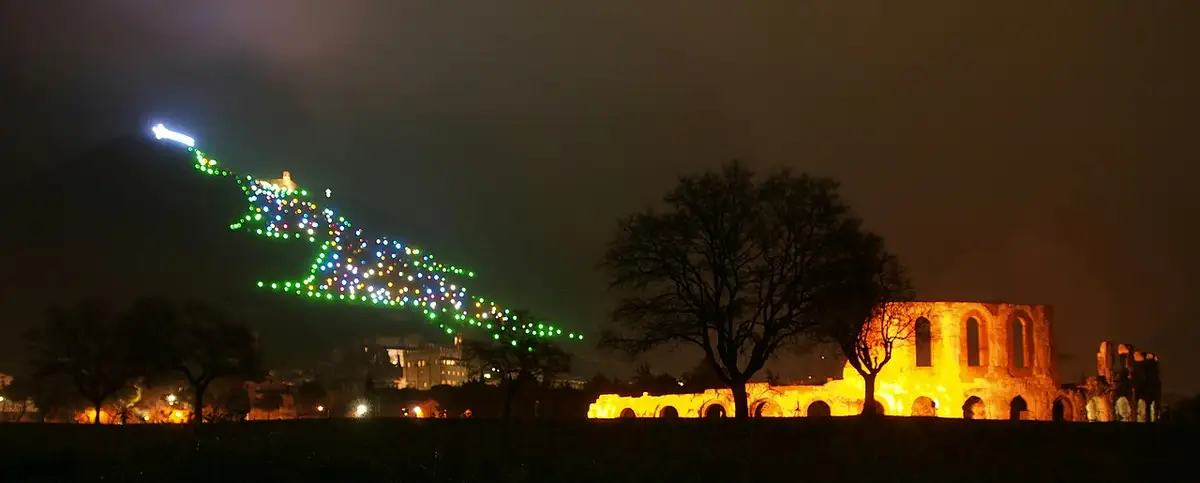
- Big moments in 2026: Gubbio lights its giant tree on 7 December; the Pope visits Piazza di Spagna at 4 pm on 8 December; Loreto lights its bonfires on 9 December.
We are Marco and Ilaria, and we live in Marche, in central Italy. We design private, tailor-made trips around Italy, and every year we watch our own towns change for the holidays. Below are the customs you will actually meet in Italy, with the official 2026 dates we checked on 18 November 2026.
When does Christmas start in Italy?
Christmas in Italy starts on 8 December, the Feast of the Immaculate Conception, and ends on 6 January with the Epiphany. Most families put up the tree and the nativity scene on or around 8 December and take them down after the Epiphany.
The 8th is a public holiday under Italian Law 260 of 1949, which also lists Christmas Day and 26 December. In Rome, Pope Leo XIV goes to Piazza di Spagna on Tuesday 8 December 2026 at 4 pm for the act of veneration of Mary Immaculate, according to the Vatican’s calendar of papal celebrations. On 18 November the Vatican had not yet published the 2026 times for the Christmas Masses, so check that page before you plan an evening around them.
Italian Christmas calendar 2026–27: dates and where to see each tradition
Italian Christmas is a sequence of days, not one day. This table lists the dates that matter for a visitor this season and where each tradition is easiest to see.
| Date (2026–27) | Tradition | Where to see it |
|---|---|---|
| Sat 21 Nov – Wed 6 Jan | Christmas markets and lights | Gubbio, Umbria: “Gubbio è Natale” (official site) |
| Mon 7 Dec, evening | Lighting of the giant tree of lights on Mount Ingino | Gubbio (gubbionatale.it) |
| Tue 8 Dec | Immaculate Conception, public holiday; trees go up | Rome: the Pope at Piazza di Spagna, 4 pm (Vatican) |
| Wed 9 – Thu 10 Dec | Festa della Venuta: bonfires and a night procession | Loreto, Marche: blessing of the fire 5 pm, procession after the 9 pm Mass (Sanctuary) |
| Sun 13 Dec | Santa Lucia: gifts for children in the north, procession in Syracuse | Syracuse, Venice, Verona, Brescia (italia.it) |
| Thu 24 Dec | Vigilia: fish dinner, Midnight Mass, living nativity scenes | Greccio, Lazio, where the first nativity was staged in 1223 (italia.it) |
| Fri 25 Dec | Christmas lunch with the family | At home and in restaurants everywhere |
| Sat 26 Dec | Santo Stefano, public holiday | Visits to nativity scenes, leftovers, card games |
| Thu 31 Dec | New Year’s Eve: lentils, cotechino, fireworks | See our New Year’s Eve in Italy guide |
| Wed 6 Jan | Epiphany and La Befana, public holiday | Urbania (Marche), Rome, Venice: see our Befana guide |
What are the most important Italian Christmas traditions?
Twelve customs make up an Italian Christmas. Some are national, others belong to one region, and many travelers only discover them once they are here.
- The presepe. A nativity scene in almost every home and church, often with a whole village of figures around the stable.
- The 8 December start. The tree and decorations go up on the Immaculate Conception holiday.
- Zampognari. Bagpipers from the mountains of central and southern Italy who play in town squares.
- The novena. Nine evenings of prayer and carols before Christmas; in Friuli Venezia Giulia the old Aquileian chant Missus is still sung from 15 to 23 December (italia.it).
- Santa Lucia. On 13 December she brings gifts to children in parts of northern Italy, riding a donkey.
- The Vigilia dinner. A meatless Christmas Eve meal, built around fish in most of the south.
- Midnight Mass. Many families go to Mass on Christmas Eve after dinner.
- Christmas lunch. The main meal of 25 December, often filled pasta in broth followed by roast or boiled meats.
- Panettone and pandoro. The two Christmas cakes, from Milan and Verona.
- Tombola and cards. Families play bingo-style tombola and card games through the holidays.
- Santo Stefano. 26 December is a second holiday, spent visiting relatives and nativity scenes.
- La Befana. The old woman on a broomstick who fills stockings on the night of 5 January.
Why is the nativity scene so important in Italy?
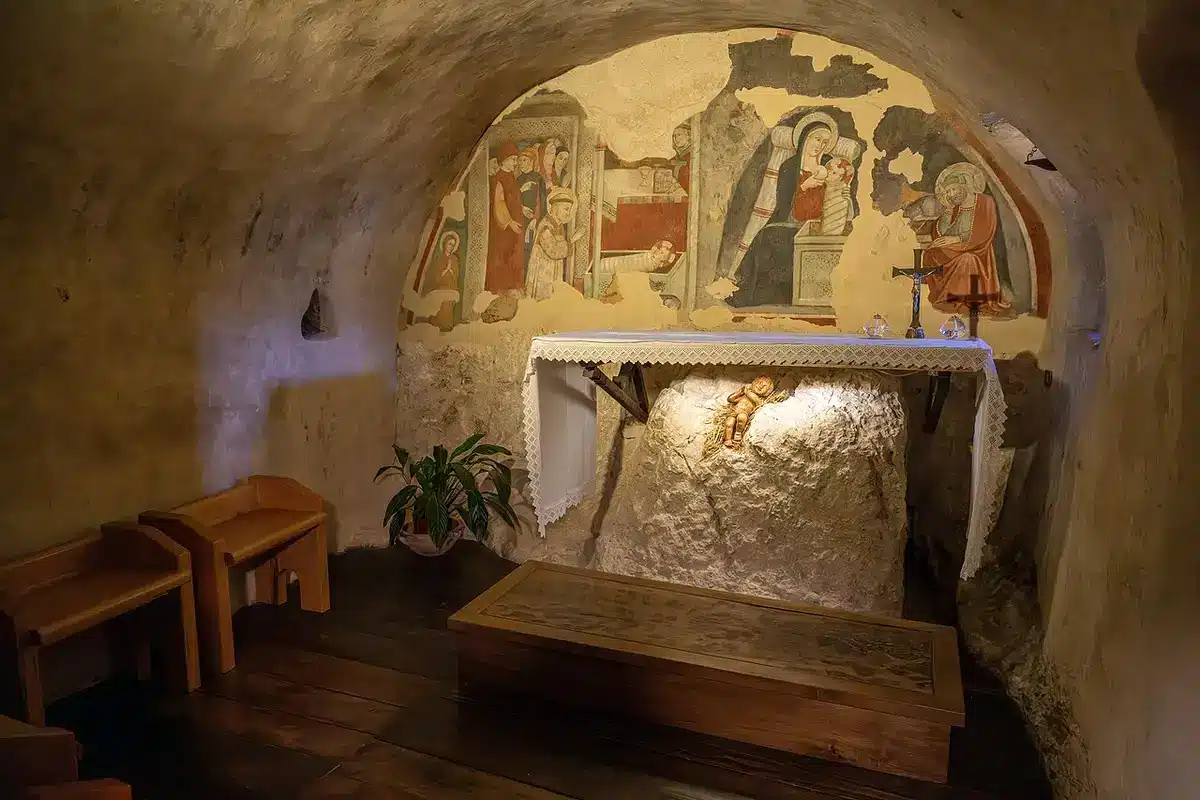
The presepe is the heart of an Italian Christmas because the tradition was born here. On the night of 24 December 1223, Saint Francis of Assisi staged the Nativity in a cave at Greccio, with a manger, an ox and a donkey, according to Italy’s official tourism site. Greccio still re-enacts it every Christmas Eve, with six living tableaux and actors in hand-sewn costumes from Rome’s Teatro dell’Opera.
Naples turned the presepe into an art. On Via San Gregorio Armeno the workshops sell nativity figures all year, from shepherds to caricatures of celebrities and politicians. The Cuciniello nativity in the San Martino museum gathers about 800 figures from the 1700s, and the Banco di Napoli nativity in the Royal Palace has more than 300 original 18th-century pieces.
In Rome, the 2026 nativity in St Peter’s Square comes from Abruzzo. The Vatican announced that the Archdiocese of Chieti-Vasto will build it with the Friends of the Nativity of Atessa, its straw roofs recalling the region’s old farm huts, and that the tree will be a silver fir of about 25 meters from Terranova di Pollino, in Basilicata. Children in hospital ceramic workshops are making its decorations, and the Viareggio Carnival Foundation is donating the nativity for the Paul VI Hall.
What do Italians eat on Christmas Eve?
On Christmas Eve most Italian families eat a meatless dinner, the cena della Vigilia, which in much of the south means several fish courses. There is no fixed number of dishes.
Typical plates include fried baccalà (salt cod), spaghetti with clams and, in Naples, capitone, a large eel. The “Feast of the Seven Fishes” that many Americans know is an Italian-American name: Britannica notes that it grew among immigrants from southern Italy and that the name first appeared in print in a Philadelphia newspaper in the 1980s. If you ask for it in Italy, people will understand you mean the Vigilia, but no one counts to seven.
What is eaten on Christmas Day in Italy?
Christmas Day is about lunch, not dinner. It usually opens with a filled pasta in broth, continues with meat and ends with panettone or pandoro and a glass of spumante.
Each region keeps its own first course: tortellini in broth in Bologna, cappelletti in broth in Romagna and here in Marche, agnolotti in Piedmont, baked lasagne in much of the south. Lunch often stretches into the afternoon, and many families keep the TV on for the Pope’s Christmas blessing from St Peter’s.
Panettone and pandoro: what the law says
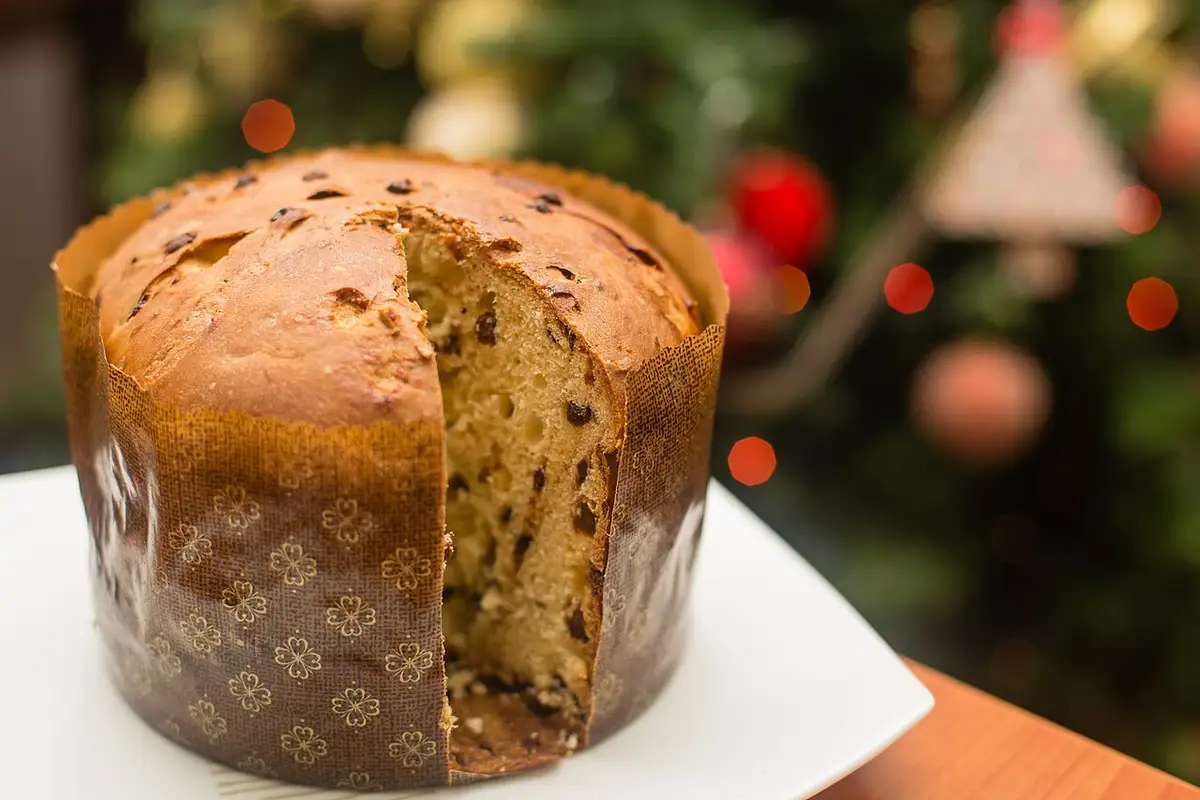
Panettone comes from Milan and pandoro from Verona. Italia.it tells how the Milanese pastry chef Giovanni Felice Luraschi gave panettone its tall, airy shape at the end of the 1800s, and how pandoro’s eight-pointed star was designed by the Veronese painter Angelo Dall’Oca Bianca for Melegatti.
Few visitors know that both names are protected by an Italian ministerial decree of 22 July 2005. To be sold as panettone in Italy, the cake must be leavened with natural sourdough and contain at least 16% butterfat, at least 20% raisins and candied citrus peel, and at least 4% egg yolk; pandoro needs at least 20% butterfat (text of the decree, updated 2017). That is why a supermarket panettone and a bakery one can taste so different, and why it is worth reading the label.
What is Santa called in Italy?
Santa Claus is called Babbo Natale in Italy, and he brings presents on the night of 24 December. He is not the only gift bringer, though.
In Venice, Verona, Brescia, Udine and Trentino, Santa Lucia arrives first, on the night of 12 December, on a donkey: children leave biscuits, milk or wine and a carrot for the donkey. In Tuscany the gifts once came from the Ceppo, a large log lit on Christmas Eve that was meant to burn slowly until 26 December, as italia.it recalls. And on 6 January everyone waits for La Befana.
What do Italians say instead of “Merry Christmas”?
Italians say Buon Natale (Merry Christmas). You will also hear Buone feste (Happy holidays) and simply Auguri! (Best wishes), which works for Christmas, New Year and birthdays alike. For New Year it is Buon anno.
Where can you experience Christmas traditions in Marche?
Marche keeps some of Italy’s oldest Christmas customs in small towns with few crowds. These are the four we suggest for December 2026, all within a drive of each other.
- Loreto, 9–10 December. The Festa della Venuta celebrates the arrival of the Holy House. On 9 December the Sanctuary blesses the fire at 5 pm, and after the 9 pm Mass comes the procession; bonfires burn in the countryside that night (2026 programme). Read our Loreto guide.
- Candelara, near Pesaro, 28 November – 20 December. “Candele a Candelara” is a Christmas market devoted to candles. Twice a day, at 5:30 pm and 6:30 pm, the electric lights go off for 15 minutes and the village glows by candlelight. It runs on 28–29 November and 5, 6, 7, 8, 12, 13, 19 and 20 December, 10 am to 8 pm; entry is €4 before 1 pm and €6 after, free under 10 (Pro Loco).
- Gradara, 5 December – 6 January. The medieval village becomes the “Castello di Natale” for its 23rd edition, with a storyteller for families on 5, 6 and 7 December (Let’s Marche). See our Gradara guide.
- Gubbio, just over the border in Umbria, 21 November – 6 January. Markets, an ice rink and, from 7 December, the tree of lights on Mount Ingino that the town bills as the largest in the world (gubbionatale.it).
Christmas in Marche, planned by locals
We design private tours of Marche for 1 to 7 guests: candlelit Candelara, Loreto’s bonfire night, truffles and Christmas lunch in a family-run agriturismo. Our own drivers take you between towns, so nobody has to drive home after dinner.
Where do the zampognari come from?
The zampognari are shepherd musicians from the Apennines of central and southern Italy who come down to the towns at Christmas to play the zampogna (bagpipe) and the ciaramella (a reed pipe).
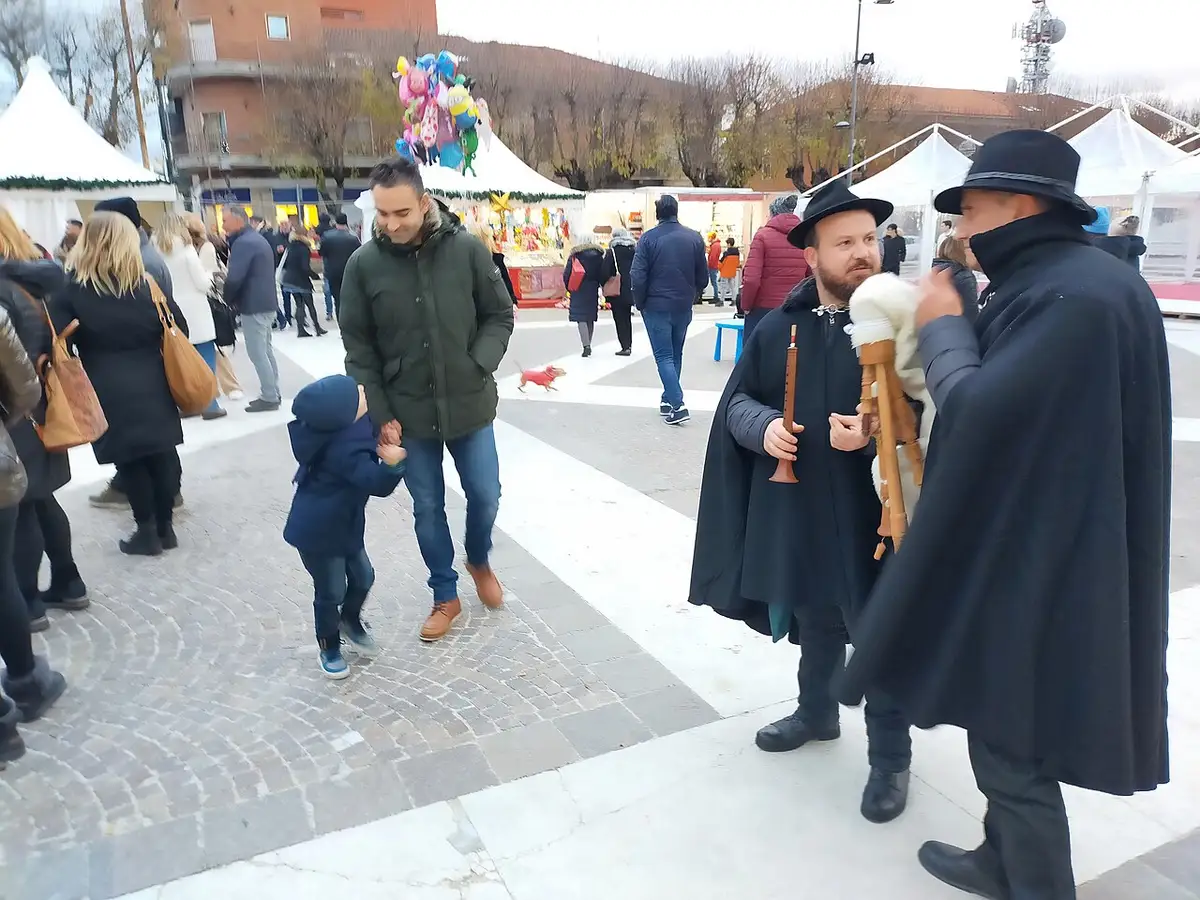
You will hear them in Christmas markets and village festivals, often alongside bands and choirs, as italia.it describes for places like Candelo in Piedmont and Erice in Sicily. Abruzzo, our neighbor to the south, also stages one of Italy’s best-loved living nativity scenes at Rivisondoli, among snow and torchlight.
Italian Christmas traditions: FAQ
What are three traditional Italian Christmas traditions?
The three most widespread are the presepe (nativity scene) set up around 8 December, the meatless fish dinner on Christmas Eve, and panettone or pandoro at the end of Christmas lunch. Many Italians would add La Befana on 6 January.
What is eaten on Christmas Day in Italy?
Christmas Day centers on lunch. It usually starts with filled pasta in broth, such as tortellini in Bologna or cappelletti in Marche, continues with roast or boiled meats, and ends with panettone or pandoro and spumante.
What day do Italians decorate for Christmas?
Traditionally on 8 December, the Feast of the Immaculate Conception, which is a public holiday. Decorations stay up until after the Epiphany on 6 January.
Is 26 December a holiday in Italy?
Yes. Santo Stefano, 26 December, is a national public holiday under Law 260 of 1949, together with 8 December, Christmas Day, 1 January and 6 January. In 2026 it falls on a Saturday.
Do Italians celebrate the Feast of the Seven Fishes?
Italians eat fish on Christmas Eve, especially in the south, but they call the meal the Vigilia and do not count the dishes. The name Feast of the Seven Fishes was born among Italian Americans.
What is Santa called in Italy?
Babbo Natale. He brings gifts on Christmas Eve, but in parts of northern Italy Santa Lucia brings presents on 13 December, and everywhere La Befana fills stockings on the night of 5 January.
Plan an Italian Christmas with locals
Sweet Life Italy is a certified incoming tour operator of the Marche Region, based in Castelraimondo and founded by Marco and Ilaria, who live in Marche. We design private, tailor-made trips for 1 to 7 guests across Marche and the rest of Italy, and we bring more than 13 years in luxury tourism to every itinerary.
We plan every trip with at least 8 weeks’ notice, so Christmas 2026 is already too close for a new trip with us; this is the right moment to plan Christmas 2027, or a winter trip after the holidays. For more ideas, read our guides to Italy in December and Italy in January. When you are ready, tell us about your trip and we will start with a free video call, then send a day-by-day proposal and a free first estimate.
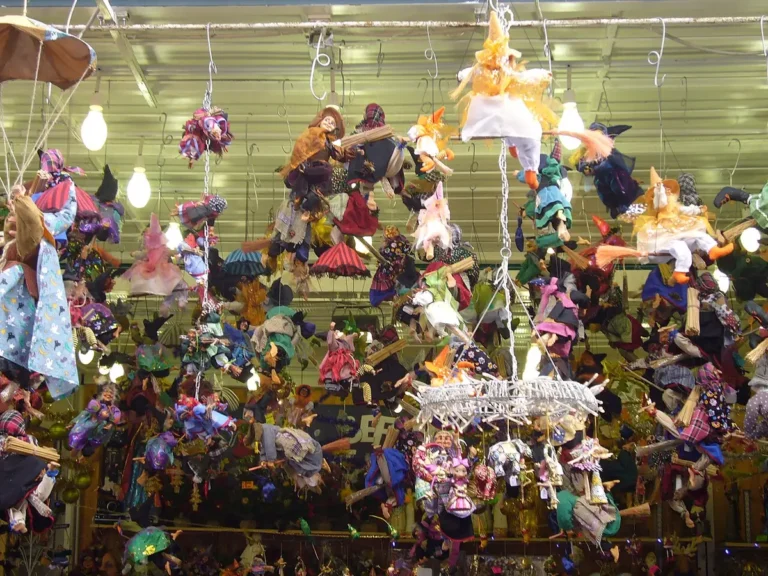
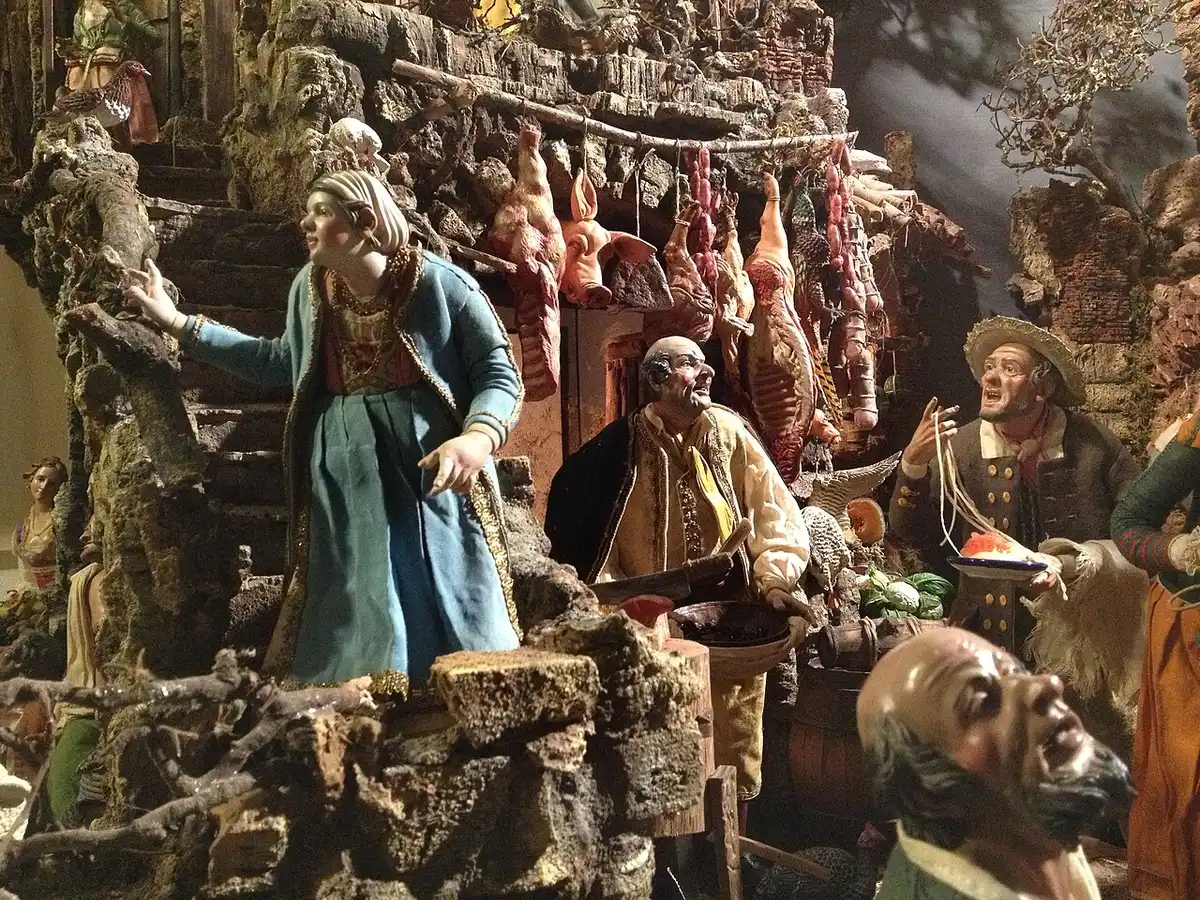
Featured photo: Neapolitan nativity figures by Antonio Fucito via Wikimedia Commons, CC BY-SA 2.0.