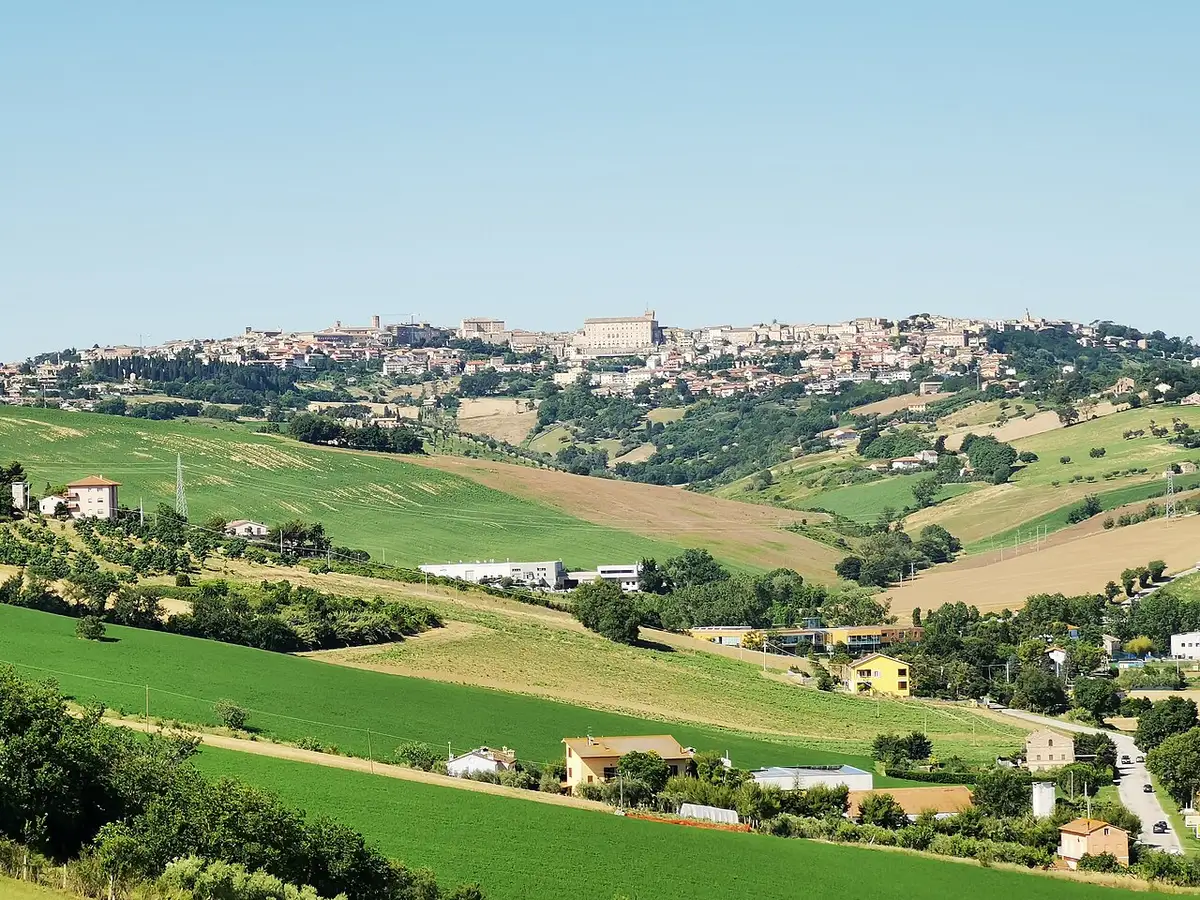
Grottammare is a seaside town on the Adriatic coast of southern Marche, in the province of Ascoli Piceno, between San Benedetto del Tronto and Cupra Marittima. It is worth visiting because it is two towns in one: a walled medieval village on the hill, listed among the most beautiful villages in Italy, and a palm-lined seafront with Blue Flag beaches.
We are Sweet Life Italy, a Marche tour operator run by Marco and Ilaria, who live in the region, and we design private Marche tours that often end with an evening on this stretch of coast. This guide covers what to see in Grottammare, the beaches, how to get there, where to eat, when to go and what is nearby, with one detail most guides miss: in 2026 the town’s civic museums open only on set dates, and none in November.
Grottammare: key facts
- Region and province: Marche, province of Ascoli Piceno, on the Riviera delle Palme (Italia.it)
- From Ancona: regional trains between Ancona and Grottammare station take about 1 hour to 1 hour 15 minutes (RFI timetable, valid to 12 December 2026)
- From Rome: direct FlixBus coaches, the fastest taking about 2 hours 55 minutes (FlixBus)
- Best for: a medieval village with sea views, Liberty villas, sandy beaches, modern sculpture and fish dinners by the sea
- How long to spend: half a day for the old town, a full day if you add the seafront and a swim
Where is Grottammare, Italy?
Grottammare is on the southern Marche coast, on the stretch of shore called the Riviera delle Palme, just north of San Benedetto del Tronto. The town has two parts: the old village, Grottammare Alta, on a hill above the sea, and the Marina along the beach.
The Marina is the younger half. After repeated landslides on the old center, and a big one on 25 January 1779, Pope Pius VI approved a plan for a new town by the coast, designed by the architect Pietro Augustoni on a grid of straight streets, according to the town’s tourism site. The 43rd parallel north crosses the town, marked since 2012 by the Dream Point sculpture on the main coast road; geographers and climatologists treat it as the line south of which the Mediterranean climate begins on this coast (Visit Grottammare).
Is Grottammare worth visiting?
Yes, especially if you want an old village and a real beach in the same afternoon. Grottammare is listed among I Borghi più belli d’Italia, and both of its beaches, Spiaggia Nord and Spiaggia Sud, hold the Blue Flag in 2026 (Ministry of Tourism list).
It is also the hometown of Pope Sixtus V, born Felice Peretti (Comune di Grottammare), and of the sculptor Pericle Fazzini, born here on 4 May 1913, whose works you meet both in a museum and along the seafront. The honest caveat: this is a summer town first. Outside the season it is calm and very pleasant for walking, but the museums keep short calendars, so check the dates below before you plan around them.
What to see in Grottammare?
The essentials are Piazza Peretti and its sea-facing loggia, the Teatro dell’Arancio, the church of San Giovanni Battista, the Torrione della Battaglia with its Fazzini museum, and, down by the sea, the Liberty villas and Palazzo Kursaal.
| Sight | What it is | Time needed | Our tip |
|---|---|---|---|
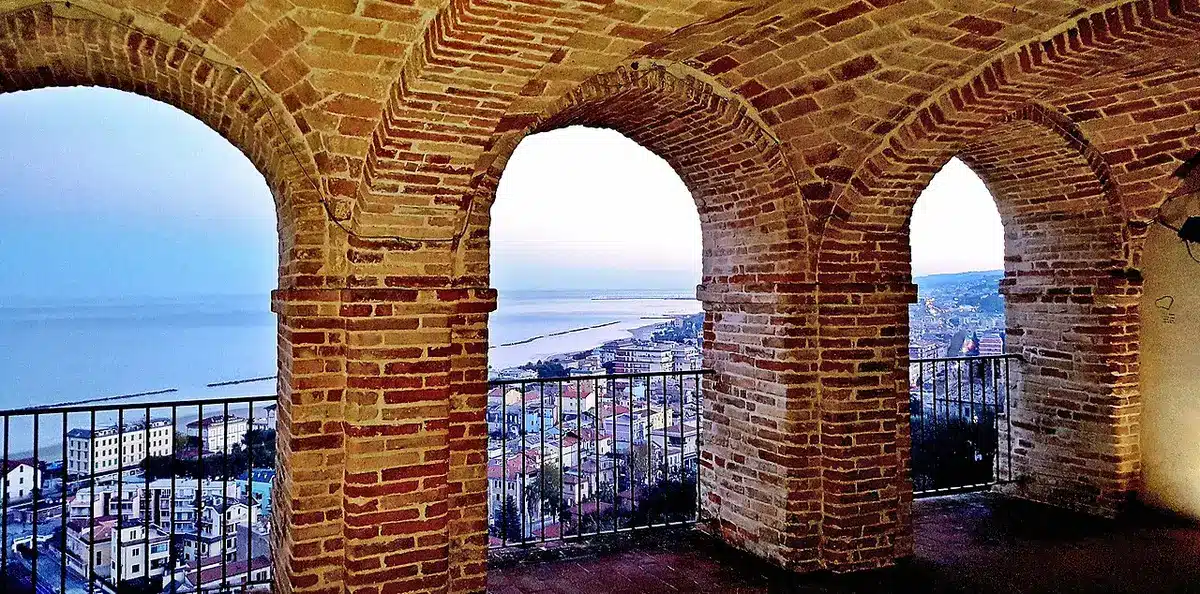
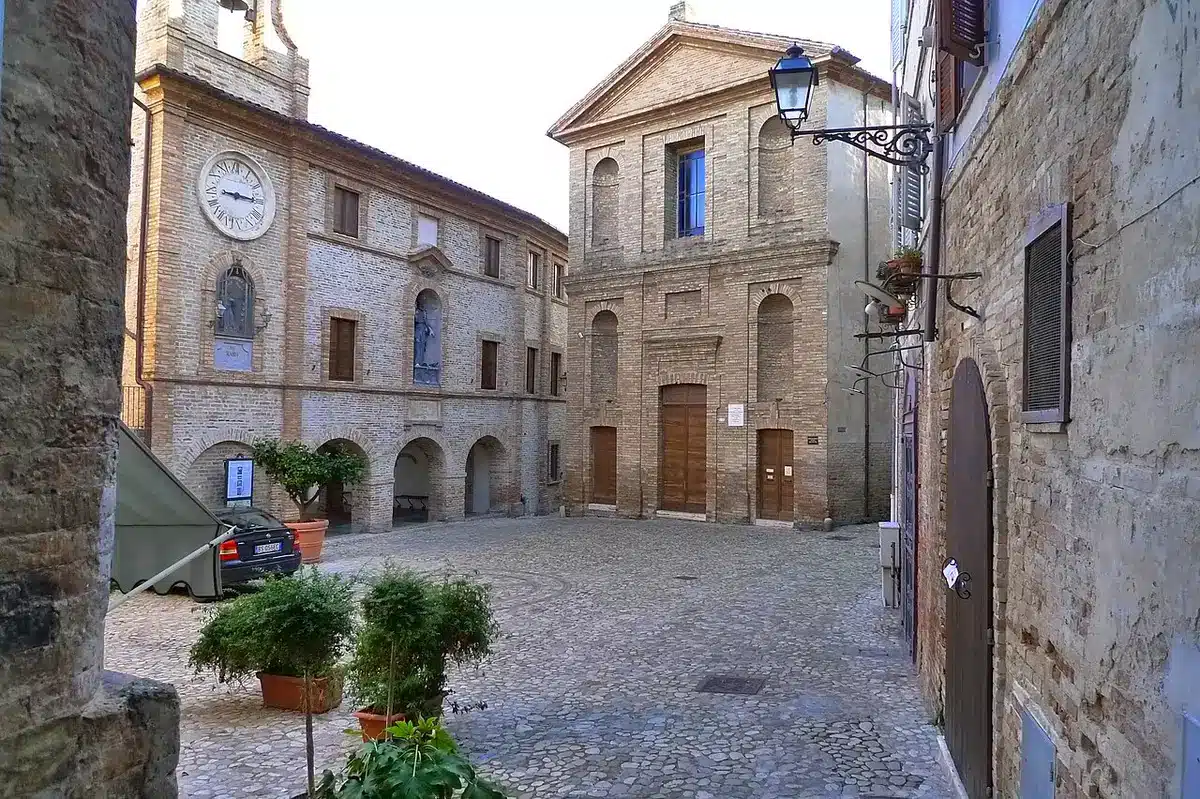
| Piazza Peretti and the loggia | Brick square at the heart of the old village, with arches opening onto the sea | 30 minutes | Stand under the arches at sunset |
| Teatro dell’Arancio | Late 18th-century theater with the 1844 Pietro Mei clock inside | 15 minutes outside | Look up at the 1794 statue of Sixtus V on the facade |
| San Giovanni Battista and Museo Sistino | Church with the chalice Sixtus V gave his hometown | 20 minutes | Find the two Vittore Crivelli panels |
| Torrione della Battaglia | 16th-century tower, now a Pericle Fazzini museum | 45 minutes | Open on set dates only in 2026 |
| Castle and walls | Highest point of the medieval village | 20 minutes | Best views north and south along the coast |
| Viale Colombo and Piazza Kursaal | Liberty villas, palms and the Kursaal palace by the beach | 45 minutes | Walk it in the evening, as locals do |
| Dream Point 43° Parallelo | Travertine sculpture marking the 43rd parallel | 10 minutes | A quick stop on the coast road |
Piazza Peretti and the loggia
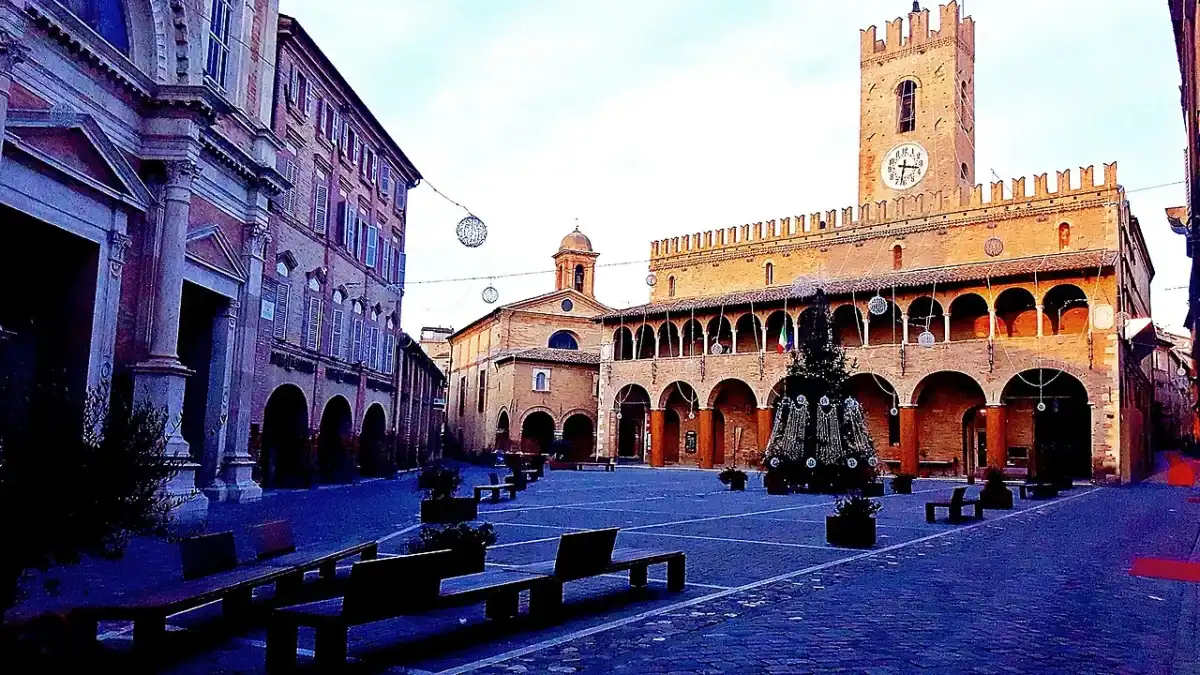
Piazza Peretti is the center of the old village. Its origins are medieval, but its present look dates from the late 18th century and the architect Pietro Maggi. On the east side a deep loggia of brick arches opens straight onto the Adriatic, and on the same side you can spot a restored Italian-hours sundial, a system in which the day started at sunset (Piazza Peretti, the clocks of Grottammare).
Teatro dell’Arancio
The theater takes its name from an orange tree that once grew in the square, cared for each year by a local family in exchange for a tax exemption. Pietro Maggi designed the brick facade, with a niche holding a statue of Sixtus V made in 1794 by Stefano Interlenghi and a clock tower with a clock donated by Pope Pius IX in 1857. The theater reopened in 2003 after restoration (Visit Grottammare). Since December 2022 it has also displayed the restored mechanical clock built by Pietro Mei in 1844, which was once hidden behind the stone dial on the tower (source).
San Giovanni Battista and the Museo Sistino
Next to the theater, the church of San Giovanni Battista reopened for worship after a restoration completed in 2002 and also houses the Museo Sistino of sacred art. Look for the chalice donated by Sixtus V to his hometown, a Sacra Conversazione by Vincenzo Pagani and two panels of San Rocco and San Sebastiano by Vittore Crivelli, found during maintenance work in 1968 and 1969 (Comune di Grottammare).
The Torrione della Battaglia and the Fazzini museum
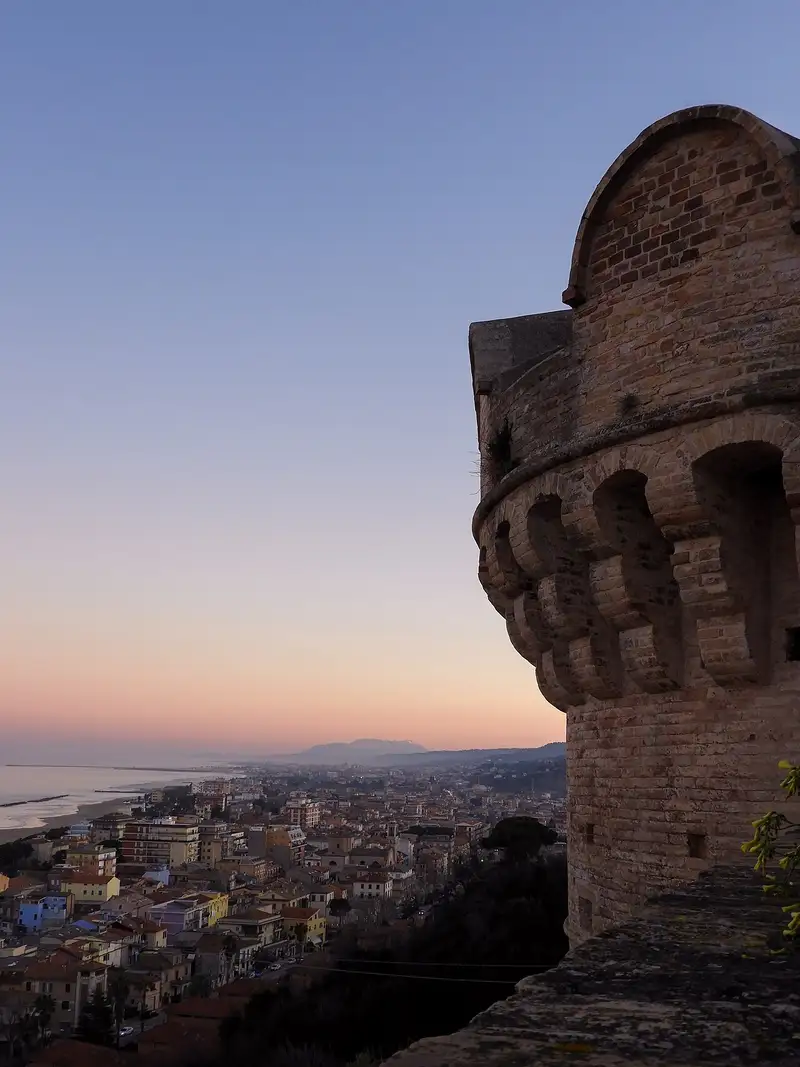
The Torrione della Battaglia is a round tower built from 1540, after pirate raids on the coast; in 1525 a crew from Dulcigno, in today’s Montenegro, sacked the village and kidnapped some of its people (Visit Grottammare). Since 2004 it has been a museum of Pericle Fazzini, with about 230 works, including small gold and silver sculptures and the model for the Resurrection, the huge sculpture in the Vatican’s Paul VI Audience Hall (Musei Civici).
From here, walk up to the castle at the top of the village, documented since the 11th century and later held by Francesco Sforza, whose wife Bianca Maria Visconti stayed here. The Museo Il Tarpato in Piazza Peretti shows the naive paintings of Giacomo Pomili (1925 to 1997), full of the village’s history and folk tales.
The Marina: Liberty villas, Piazza Kursaal and the MIC
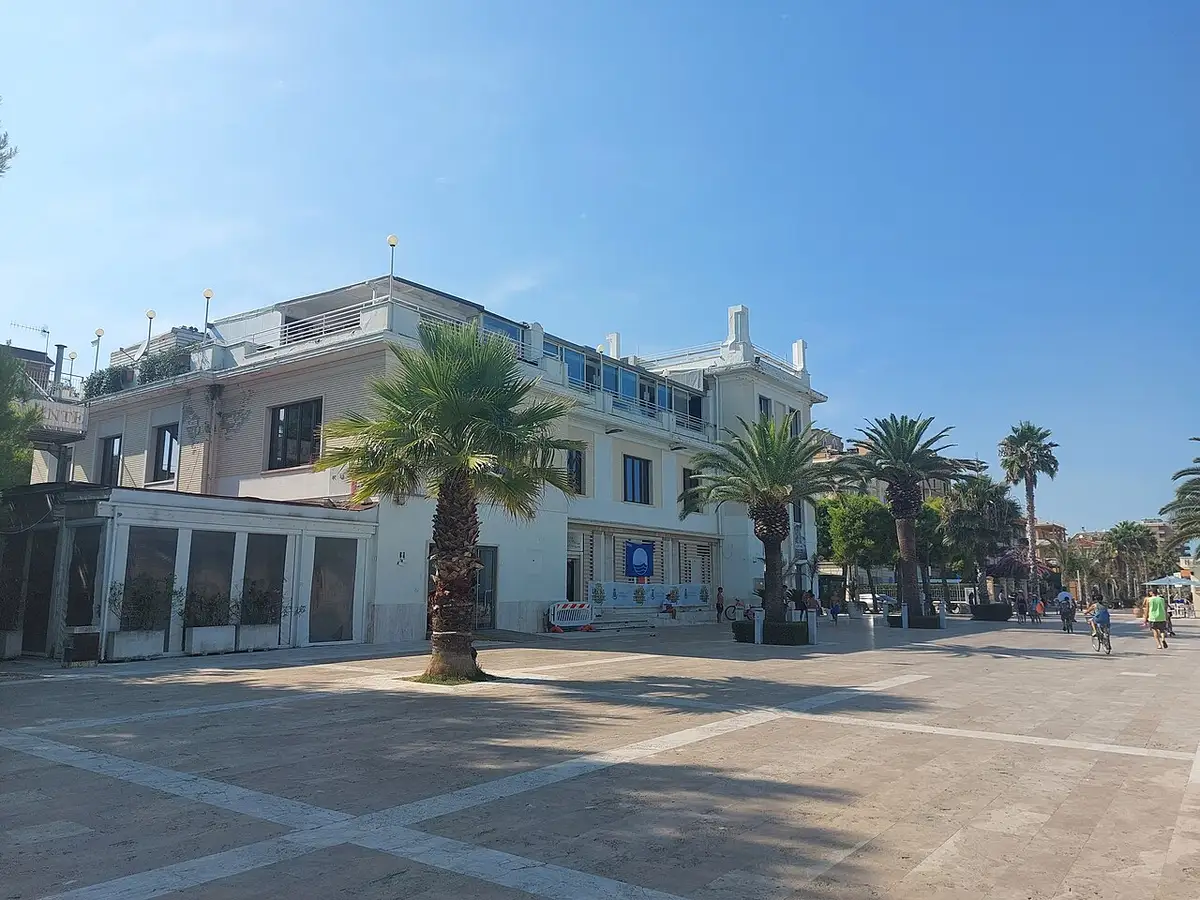
Down by the sea, Viale Colombo (the old Viale Marino, laid out in 1890) is lined with early 20th-century Liberty villas, paved in porphyry and white Carrara marble, and runs into Piazza Kursaal by the beach. The finest Liberty building in town is the Villino Matricardi-Cola, designed in 1913 by Cesare Bazzani, and the Canary Island date palms along the seafront were planted in the first decades of the 1900s (Liberty itinerary).
Palazzo Kursaal began in 1870 as a seaside refreshment spot, became the town’s first bathing establishment in 1873 and, from 1952, one of the most fashionable dance halls on the Adriatic; Lucio Battisti played here in the summer of 1970 (Palazzo Kursaal). Today it houses the MIC, a museum of contemporary illustration with drawings by Milo Manara, Guido Crepax and Tanino Liberatore (MIC).
Fazzini’s sculptures by the sea
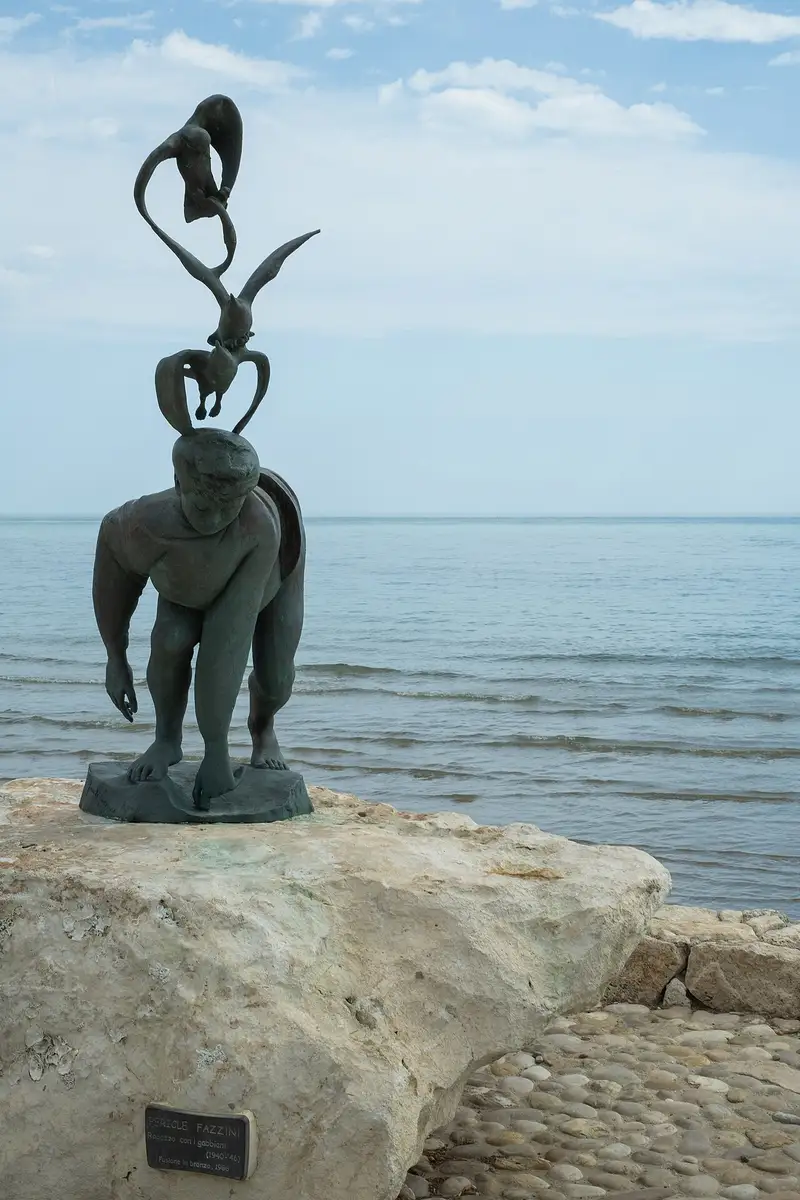
You do not need a ticket for the open-air Fazzini trail. Sculptures such as Ragazzo con i gabbiani (Boy with Seagulls) and Metamorfosi stand along a route between the beach and the old village, and his Via Crucis is inside the church of Sant’Agostino (Fazzini itinerary).
When are the Grottammare museums open in 2026?
The three civic museums (MIC, Torrione della Battaglia and Il Tarpato) open only on dates set in the official 2026 calendar. There are no openings in November; the next ones are 8 December, 26 and 27 December and 6 January 2027, from 16:30 to 19:30 (2026 museum calendar).
In summer they open in the evening: in 2026, from 18 July to 30 August, every day except Monday from 19:00 to 22:00. Outside these dates, the town can arrange special openings for schools and groups of at least 15 people, booked through the tourist office, if staff are available. That is useful for small private groups to know: we ask well in advance.
Want to see Grottammare as part of a private Marche trip?
We can pair Grottammare with the Piceno hills: a morning in Ascoli Piceno or Offida with a licensed guide, a family winery for lunch, then the old village at golden hour and fish by the sea, with our own drivers taking you there. See our private Marche tours to get an idea of how we work.
What are the beaches like in Grottammare?
Grottammare has wide sandy beaches with shallow water, beach clubs and stretches of free public beach, backed by a long promenade of palms and oleanders (Visit Grottammare beaches). Both Spiaggia Nord and Spiaggia Sud are Blue Flag beaches in 2026, one of 20 Blue Flag places on the Marche coast (Regione Marche).
This is a family beach, calm and organized, rather than a coastline of coves. Cycle paths run along the sand to the neighboring towns (Nature and the Sea itinerary), so you can rent a bike in town and ride along the shore.
How do you get to Grottammare?
The easiest way is the train: Grottammare has its own station on the Adriatic line, and regional trains from Ancona take about 1 hour to 1 hour 15 minutes (RFI timetable).
- From Rome: FlixBus runs direct coaches from Rome to Grottammare, the fastest in about 2 hours 55 minutes (FlixBus).
- Airports: the town lists Marche Airport in Ancona and Abruzzo Airport in Pescara as the nearest (Visit Grottammare transport).
- By car: the town has direct access from the A14 motorway (source).
- In town: walk, take a taxi from the station square, rent a bike, or use the small tourist train between the seafront and the old village, listed at 3.50 euros, evenings from 18:00 to 23:30 (source). Check it is running if you visit outside summer.
The walk up to Grottammare Alta is short but steep. When we bring guests here, our own drivers drop them at the top so they can stroll downhill to the sea.
Where to eat in Grottammare?
Eat fish by the sea. The seafront is lined with beach chalets that double as restaurants, and the town tourism site lists trattorias, pizzerias and pastry shops across town (Visit Grottammare).
Two local flavors are worth looking for. Citrus is part of the town’s identity (an orange tree gave the Teatro dell’Arancio its name), and the Piceno blond orange and Grottammare bay leaf have their own itinerary on the town’s tourism site (Visit Grottammare). In November, the Fiera di San Martino celebrates the new wine with roasted chestnuts; in 2025 it filled the center on 10 and 11 November with 380 stalls (Comune di Grottammare). Check the town’s site for the 2026 dates.
When is the best time to visit Grottammare?
Summer is best for the beach and the museums, which in 2026 opened every evening except Monday from 18 July to 30 August. Spring and autumn are quieter and lovely for the old village, but check the museum calendar first.
Around 11 November the San Martino fair brings the whole town into the streets, and the holiday openings of the museums on 8, 26 and 27 December and 6 January make a winter visit worthwhile too (museum calendar).
How to spend one day in Grottammare
This is the day we would plan for friends visiting from abroad.
- 10:00 Start at the top: the castle and the walls of Grottammare Alta, with views along the coast.
- 10:45 Walk down to Piazza Peretti, the loggia and the facade of the Teatro dell’Arancio.
- 11:30 Visit San Giovanni Battista, then the Torrione della Battaglia if the museum is open that day.
- 13:00 Lunch with a sea view, in the village or on the beach.
- 15:00 Walk down to the Marina: Viale Colombo, the Liberty villas and Piazza Kursaal.
- 16:30 Follow the Fazzini sculptures along the seafront, or rent a bike and ride the coastal path.
- 18:00 Swim in summer, or an aperitivo by the sea the rest of the year.
- 20:00 Fish dinner on the seafront.
What is near Grottammare?
Grottammare is a good base for the southern Marche coast and the Piceno hills. Train times below come from the RFI timetable.
- San Benedetto del Tronto: about 5 minutes south by train, a bigger resort with a long palm-lined seafront.
- Cupra Marittima: about 4 minutes north by train, another Blue Flag beach town.
- Porto San Giorgio: about 17 minutes north by train, the seaside gateway to the hill town of Fermo.
- Ascoli Piceno: change at Porto d’Ascoli for the branch line, about 35 to 45 minutes to the city. Read our Ascoli Piceno guide.
- Offida: lace, wine and a cliff-top church in the hills; see our guide to Offida.
For more places to combine, see our list of towns to visit in Marche and how many days to spend in the region.
Frequently asked questions
Is Grottammare, Italy worth visiting?
Yes. Grottammare combines a medieval hilltop village listed among the most beautiful villages in Italy with a palm-lined Liberty seafront and two Blue Flag beaches. Half a day covers the old town; a full day adds the Marina and a swim.
Where is Grottammare in Italy?
Grottammare is on the Adriatic coast of the Marche region, in the province of Ascoli Piceno, on the Riviera delle Palme between San Benedetto del Tronto and Cupra Marittima.
What is Grottammare famous for?
Grottammare is famous as the hometown of Pope Sixtus V and of the sculptor Pericle Fazzini, for Piazza Peretti and its loggia over the sea, and for its Liberty villas and palm-lined beaches on the Riviera delle Palme.
Does Grottammare have a train station?
Yes. Grottammare has its own station on the Adriatic railway. Regional trains to and from Ancona take about 1 hour to 1 hour 15 minutes, and San Benedetto del Tronto is about 5 minutes away.
How do you get from Rome to Grottammare?
FlixBus runs direct coaches from Rome to Grottammare; the fastest takes about 2 hours 55 minutes. By car the town is reached from the A14 motorway.
Are the Grottammare museums open in November 2026?
No. The civic museums (MIC, Torrione della Battaglia and Il Tarpato) have no openings in November 2026. They next open on 8 December, 26 and 27 December and 6 January 2027, from 16:30 to 19:30. Groups of 15 or more can ask for special openings.
Is Grottammare good for a beach holiday?
Yes, especially for families and couples who want calm water. The beaches are sandy with shallow water, beach clubs and free public stretches, and both Spiaggia Nord and Spiaggia Sud hold the Blue Flag in 2026.
Plan your Grottammare visit with locals
Sweet Life Italy is a certified incoming tour operator of the Marche Region, based in Castelraimondo and founded by Marco and Ilaria, who live in Marche. We design private, tailor-made trips for 1 to 7 guests across Marche and the rest of Italy, with licensed guides, food and wine experiences and our own drivers, and we bring more than 13 years in luxury tourism to every itinerary. Grottammare can be the seaside chapter of a private Marche tour or part of one of our private luxury tours of Italy.
Tell us about your trip and we will start with a free video call. After that we send a day-by-day proposal and a free first estimate. Please allow at least 8 weeks before your travel dates.
Featured photo: the old village of Grottammare looking over the town and the sea, by Luigi936 via Wikimedia Commons, CC BY-SA 4.0.