
Loreto, Italy is a hill town in Marche, a few miles inland from the Adriatic near Ancona, built around the Basilica of the Holy House. Inside stands the Santa Casa, venerated as the house of the Virgin Mary from Nazareth. It is one of the great Catholic pilgrimage sites, and half a day is enough to see the basilica, museum and walls.
Loreto, Italy: key facts
- Where: province of Ancona, Marche, on a hill above Porto Recanati and the Conero Riviera.
- Famous for: the Holy House of Nazareth inside the Basilica della Santa Casa, built between 1469 and 1587.
- Sanctuary hours: open every day from 6:15 am to 7:00 pm, free entry.
- Museum: daily 10 am to 1 pm and 3 to 6 pm; €8, or €10 with the guided walk on the fortified walls.
- Big dates: the Feast of the Coming (Festa della Venuta) on the night of 9 December, with bonfires across the countryside, and the feast of Our Lady of Loreto on 10 December.
- Getting there: regional trains from Ancona take about 17 to 26 minutes; from the station, 330 steps of the Scala Santa climb to the basilica.
We are Marco and Ilaria, and we live in Marche. We design private, tailor-made tours of Marche, and Loreto is one of the places our guests ask about most, often as part of a pilgrimage that continues to Assisi. Every opening time, ticket price and date below comes from the sanctuary’s own website and official tourism pages, checked on 13 November 2026.
What is Loreto, Italy famous for?
Loreto is famous for the Holy House, the Santa Casa: three stone walls that tradition holds to be the house where Mary was born, lived and received the Annunciation. The whole town grew up around it, and Pope John Paul II called the sanctuary “the true Marian heart of Christianity”, as Italia.it, the official Italian tourism site, recalls.
According to the sanctuary’s history page, there was nothing on this hill before the house arrived. Pilgrims came, the sick first, then people from all over the Catholic world, and a town formed around the shrine. Today Loreto is also a city of art: Bramante, Sansovino, Lorenzo Lotto, Luca Signorelli, Melozzo da Forlì and Luigi Vanvitelli all worked here.
Is Mary’s house really in Loreto?
The Church venerates the Santa Casa as the walls of Mary’s house in Nazareth. The sanctuary gives two readings of how they arrived: the devout tradition of angels carrying the house, and a historical one in which Christians saved the stones after the crusaders left the Holy Land in 1291.
In the historical account on the sanctuary’s website, the house first went to Illyria, where the Shrine of Our Lady of Trsat was later built, and then, on the night between 9 and 10 December 1294, reached the territory of Recanati: first the port, then a hill along a public road, where it still stands. The sanctuary adds that the three walls fit the perimeter of the Grotto of Nazareth and that the stones are not local but typical of Palestinian building at the time of Christ.
Italia.it adds a detail many visitors find fascinating: a document from 1294 records that Nikephoros Angelos, ruler of Epirus, gave his daughter’s dowry to Philip of Taranto, and it included “holy stones taken from the Home of our Lady the Virgin Mother of God”. The same page notes that documents and excavations support the idea that the walls reached Loreto by ship, an initiative of the Angeli family, rulers of Epirus.
What to see inside the Basilica of the Holy House
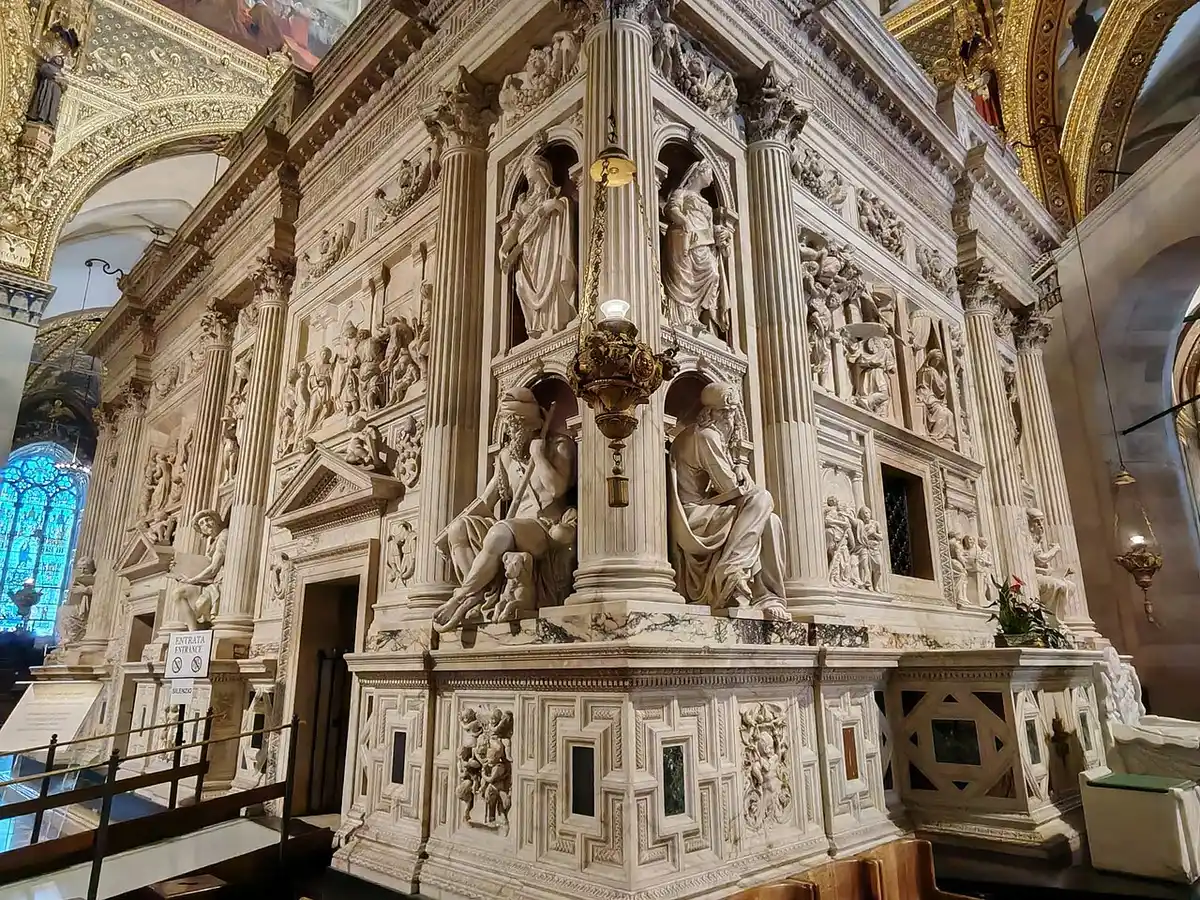
Start with the Holy House under the dome, then walk around the side chapels. The basilica was begun in 1469 under Pope Paul II and finished in 1587 with its late Renaissance facade, according to the sanctuary’s page on the basilica.
- The Holy House and its marble screen: the simple stone walls are wrapped in a marble cladding commissioned by Pope Julius II and made to Bramante’s design from 1507. Italia.it calls it one of the greatest sculptural masterpieces of the Renaissance. Its reliefs include the Annunciation, the event at the center of the shrine.
- The statue of Our Lady of Loreto: it stands by the fourth wall, which was added in Loreto. The statue you see today dates from 1922, because the earlier one was lost in a fire inside the Holy House in 1921.
- The dome: designed by Giuliano da Sangallo in the style of Brunelleschi and frescoed by Cesare Maccari with the Litany of Loreto.
- The chapels of the nations: 13 late Gothic apse chapels, several dedicated by individual countries, including the Spanish, Polish, French, German and United States chapels listed by the Loreto Pro Loco.
- The old sacristies: two are frescoed by Melozzo da Forlì and Luca Signorelli, and survive from before the 20th-century restorations.
- The Treasury Room (Sala del Pomarancio): ceiling frescoes by Cristoforo Roncalli, known as Pomarancio, and cases of gifts sent to the shrine over the centuries. The Pro Loco calls it the “Sistine Chapel of Marche”.
- The bronze doors: cast in Recanati in 1600, with scenes from the history of salvation.
Inside the Holy House, visitors walk in a slow line along the walls. Dress as you would for any church, with shoulders and knees covered, and keep silence: many people around you are praying.
Why is Our Lady of Loreto black?
The statue has a dark face because it follows the look of the older image it replaced, one of Europe’s “Black Madonnas”. The sanctuary confirms that the current statue is from 1922, after the 1921 fire; the explanation you will hear most often in Loreto is that centuries of smoke from oil lamps and candles darkened the original.
The same sanctuary page notes that Pope Benedict XV proclaimed the Virgin of Loreto patroness of all air travelers on 24 March 1920. That bond is why Loreto has a Military Aviation History Museum in its town hall, described by the Pro Loco.
Visiting Loreto with us. We can include Loreto in a private Marche tour with a licensed local guide, time for Mass or quiet prayer in the Holy House, and an afternoon in Recanati or on the Conero coast. For pilgrims, our Catholic pilgrimage tour of Loreto, Assisi and Cascia links the great shrines of Marche and Umbria, and our own drivers take you from one to the next.
Loreto opening hours, Mass times and tickets
The sanctuary is free and open every day from 6:15 am to 7:00 pm; only the museum and the walk on the walls charge a ticket. Times can change on feast days, so check the sanctuary’s official website before you go.
| What | When | Price |
|---|---|---|
| Basilica and Holy House | Daily 6:15 am to 7:00 pm | Free |
| Mass, Monday to Saturday | 7:00, 8:30, 10:00 and 11:00 am; 5:00 and 6:30 pm | Free |
| Mass, Sunday | 7:00, 8:30, 10:00, 11:30 am and 12:00 noon (12:00 in the Basilica of the Holy Pilgrim Popes); 4:00 and 6:00 pm | Free |
| Confessions | Daily 8:00 am to 12:00 noon and 3:00 to 6:00 pm | Free |
| Pontifical Museum of the Holy House | Daily 10:00 am to 1:00 pm and 3:00 to 6:00 pm | €8 |
| Walkways on the fortified walls (Camminamenti di Ronda) | Daily at 10 am, 11 am, 12 noon, 3 pm, 4 pm and 5 pm | €5 |
| Museum + walkways | As above | €10 |
A weekday Mass is also said at 7:30 am inside the Holy House, without the public, and broadcast on TV and on the sanctuary’s YouTube channel. The pilgrim welcome office on the square is open from 8:30 am to 12:30 pm and 2:30 to 6:30 pm and lends wheelchairs, according to the sanctuary’s welcome page.
The museum, Lorenzo Lotto and the walls of the basilica-fortress
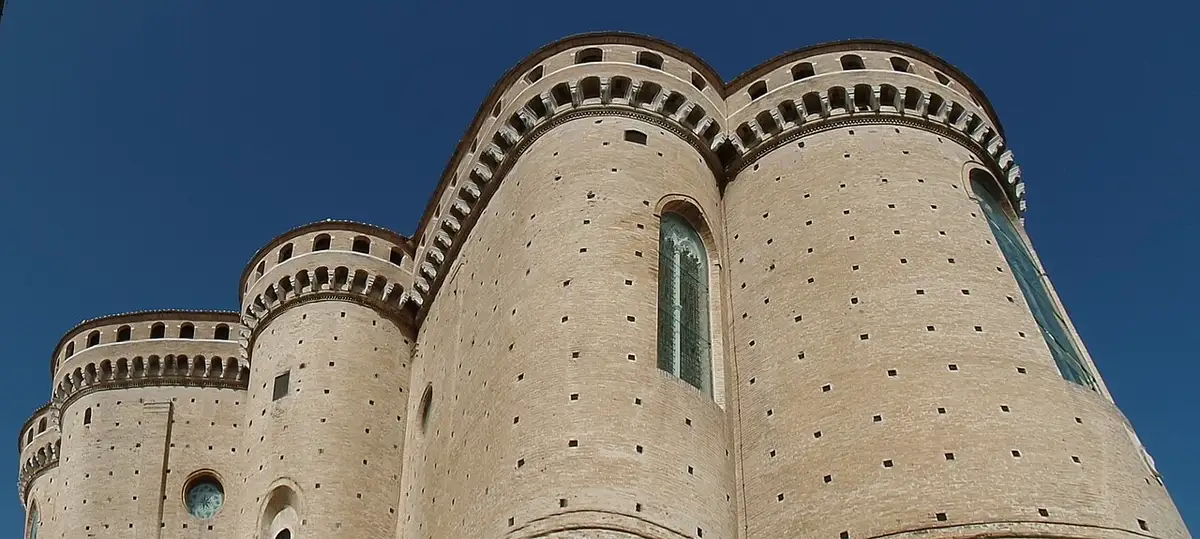
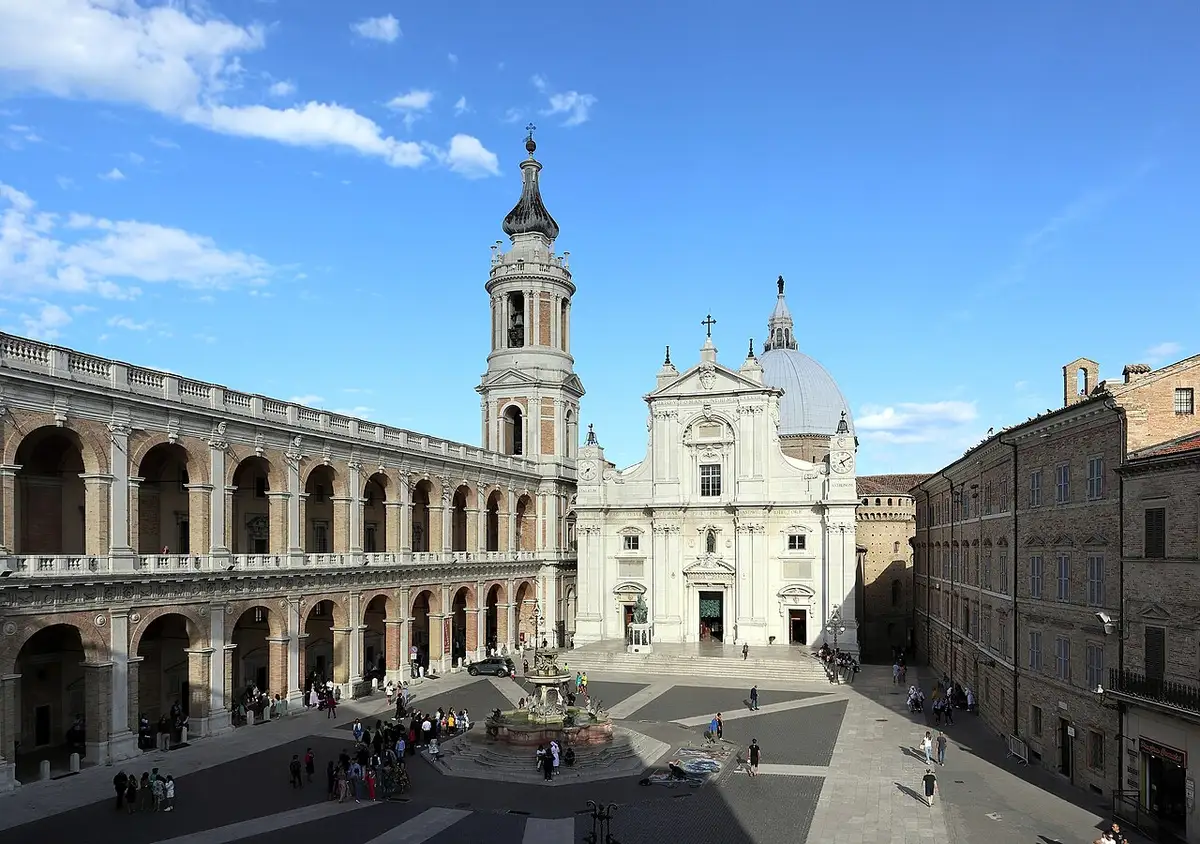
Do not skip the Pontifical Museum: it holds the late paintings of Lorenzo Lotto, who spent his last years at the shrine. The museum is on the upper floors of the Apostolic Palace, the arcaded building that frames the square, designed by Bramante and finished by Vanvitelli.
The museum page describes a whole room for Lotto, with seven of his works hung in the order the painter chose for the basilica’s choir, plus Flemish tapestries woven from Raphael’s cartoons and a large collection of maiolica jars from the shrine’s old pharmacy. The Marche Region’s museum page adds that Lotto ended his life at the sanctuary as an oblate of the Holy House.
The guided walk on the Camminamenti di Ronda is the part most visitors miss. Baccio Pontelli built these walkways and gave the sanctuary the look of a fortress, as the sanctuary explains. Let’s Marche, the regional tourism site, says the fortifications defended the shrine from the Turkish fleet that threatened the Adriatic, and recommends the walk for its views from the town to the sea. The visits start at fixed times, so plan the museum around them.
Festa della Venuta: Loreto in December
December is Loreto’s most special month. On the evening of 9 December, the eve of the house’s arrival in 1294, bonfires called fuochi della Venuta are lit across the countryside, and on 10 December the Church celebrates Our Lady of Loreto. In 2026 the eve falls on Wednesday 9 December and the feast on Thursday 10 December.
According to Let’s Marche, the people of Loreto began lighting “bonfires of joy” to celebrate the arrival, and since 1617 the custom has spread along the Via Lauretana, the old pilgrim road that linked Rome and Loreto. Every 9 December the fields glow with fires and the church bells ring. Local names for the fires include focheracci, fogarò and faori (“favors”).
If you want to be there, book your stay early, because the sanctuary is busy around the feast. For more ideas for a winter trip, see our guide to where to go in Italy in December.
How to get to Loreto
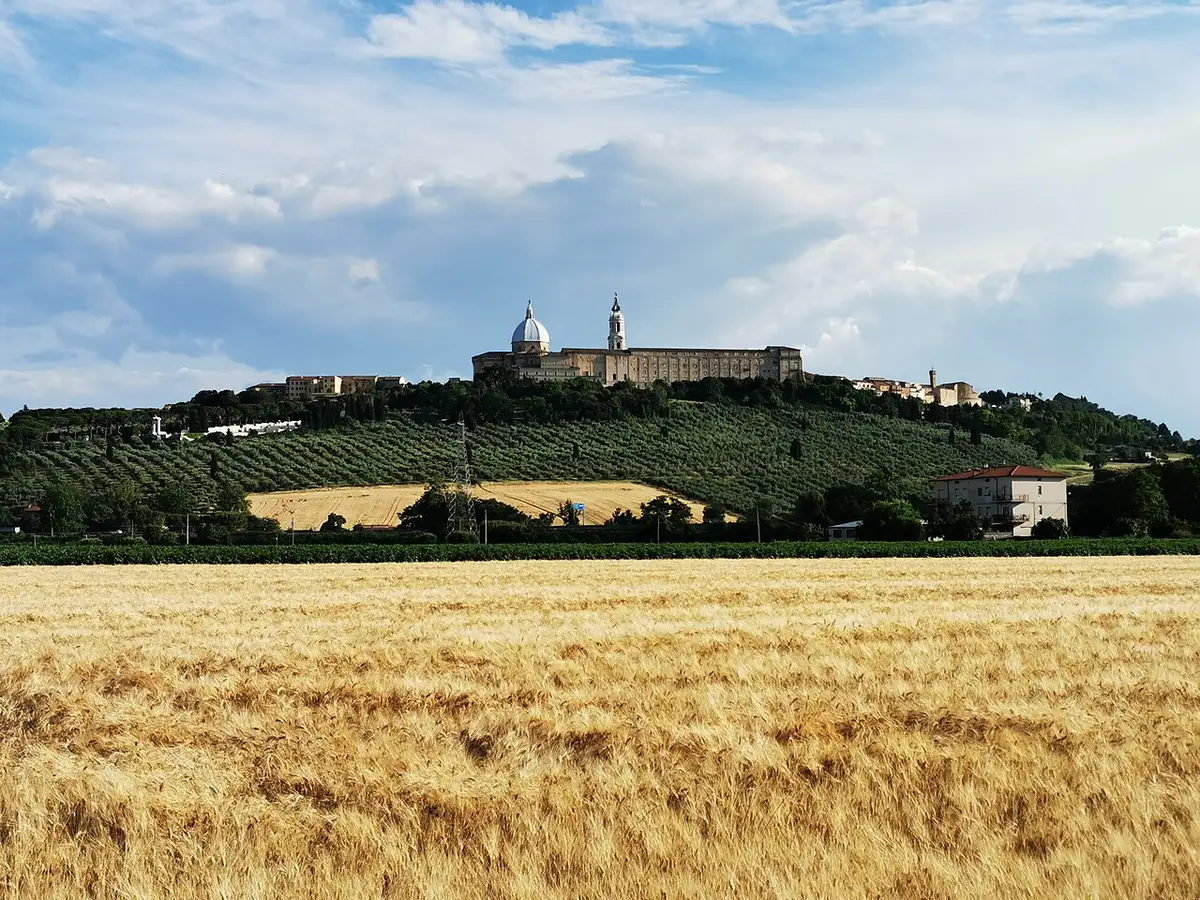
The easiest way is the train from Ancona: Loreto station is on the Adriatic line, and regional trains take about 17 to 26 minutes. From the station you can climb to the basilica on foot by the Scala Santa, or take a local bus or taxi up the hill.
- By train from Ancona: the official RFI timetable for Loreto station, valid until 12 December 2026, shows regional trains through the day; for example, the 5:15 am from Ancona reaches Loreto at 5:32, and the 6:41 am from Loreto reaches Ancona at 7:05. Some early trains do not run on Sundays and holidays.
- From the south and from Macerata: the same timetable shows direct trains from Civitanova Marche, San Benedetto del Tronto and Pescara along the coast, and some direct trains from Macerata.
- From Rome: most travelers take a train to Ancona and continue on a regional train, which is also the simplest option from Bologna and the north.
- On foot from the station: the Scala Santa has 330 steps and 15 small shrines with bronze panels of the Mysteries of the Rosary, made in 1895 by Guarino Roscioli. It ends at Porta Marina, below the apses of the basilica (Let’s Marche). Along the way is the Polish War Cemetery, where 1,112 soldiers of the Polish II Corps who fell in the Italian campaign are buried (Pro Loco).
Loreto also sits at the end of two walking routes. The Macerata to Loreto pilgrimage on foot has taken place every year since 1978, according to Italia.it, and the historic Via Lauretana arrives from Assisi and Rome.
Is Loreto, Italy worth visiting?
Yes. For Catholic travelers it is one of the most meaningful places in Europe, and for everyone else it is a compact Renaissance art town with sea views, easy to combine with the Conero coast and Recanati. It works best as a half day, or a full day with a nearby stop.
What makes it worth the trip, in our experience as locals: the moment you step from the busy basilica into the small, dim Holy House; the Lotto room in the museum, which is rarely crowded; and the view from the walls toward the Adriatic and Monte Conero. Go early in the morning or in the late afternoon for a quieter visit.
One day in Loreto: a simple plan
Here is how we would spend a day in Loreto, starting with the basilica while it is quiet and ending by the sea.
- 8:30 am, the Scala Santa: arrive by train and walk up the 330 steps to Porta Marina, or start directly in the square if you come by car.
- 9:00 am, the Holy House: visit the Santa Casa and its marble screen before the groups arrive, or join the 10:00 am Mass.
- 10:30 am, the basilica: the chapels of the nations, the sacristies of Melozzo and Signorelli, and the Treasury Room.
- 11:00 am or 12:00 noon, the walls: join a walkway visit, then see the museum and the Lotto room before it closes at 1:00 pm.
- 1:00 pm, lunch: the sanctuary’s own restaurant opens at noon, or choose a trattoria in the old town.
- Afternoon, a nearby stop: drive to Recanati, the hometown of the poet Leopardi, or down to the Conero coast at Numana or Sirolo. On the way, the small Chiesa della Banderuola near Porto Recanati marks the spot where, by tradition, the Holy House first rested.
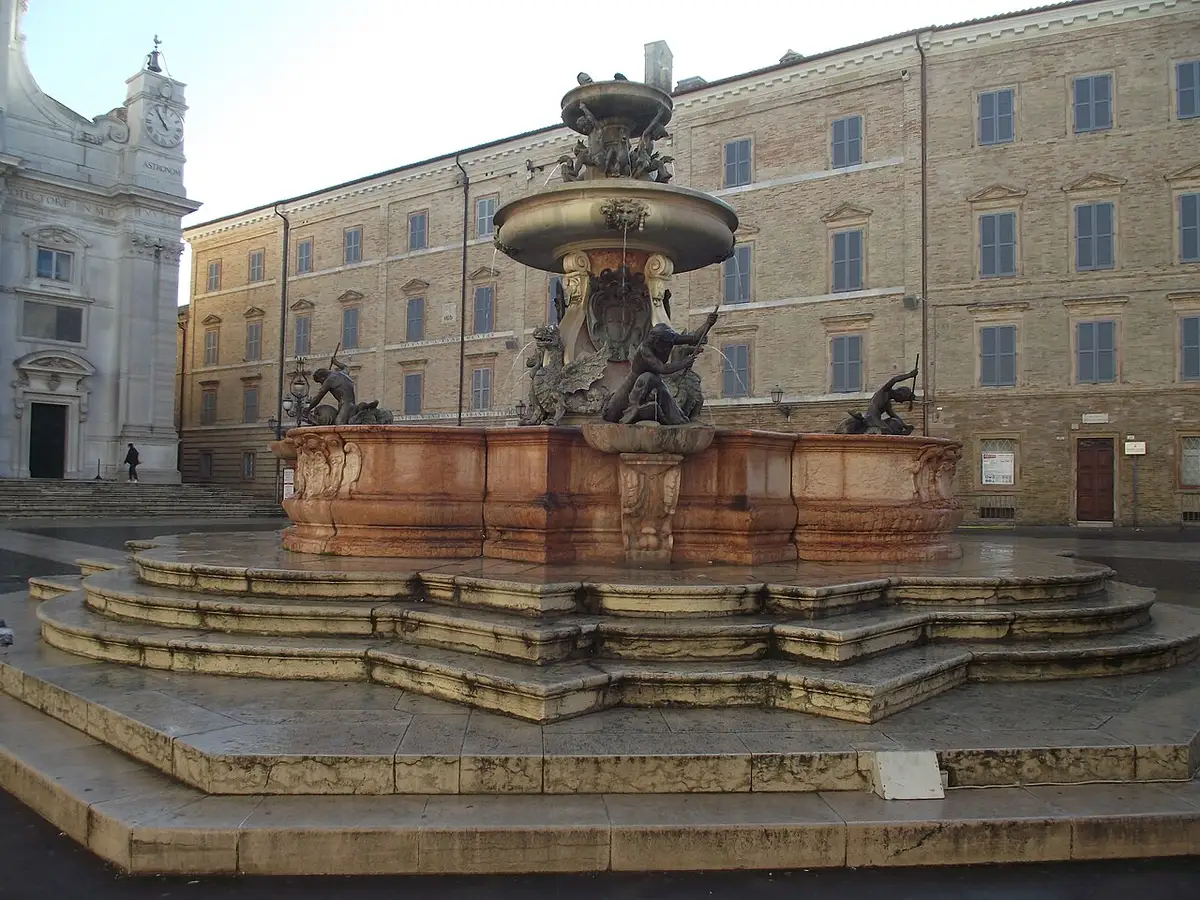
In the square, take a minute at the Fontana Maggiore, the fountain with marine allegories by Carlo Maderno and Giovanni Fontana, and look back at the facade: it closes one of the most harmonious views in Marche, between the Apostolic Palace and the Palazzo Illirico. If you want more of the region, our Marche travel guide and our list of towns to visit in Le Marche are good next reads.
FAQ: visiting Loreto, Italy
Where is Loreto, Italy?
Loreto is a hill town in the province of Ancona, in the Marche region of central Italy, a short distance from the Adriatic beach of Porto Recanati. Regional trains from Ancona take about 17 to 26 minutes.
What is Loreto, Italy famous for?
For the Holy House, or Santa Casa: three stone walls venerated as the house of the Virgin Mary from Nazareth, kept inside the Basilica della Santa Casa, built between 1469 and 1587. It is one of the most important Marian shrines in the world.
Is the Basilica of Loreto free to visit?
Yes. The basilica and the Holy House are free and open daily from 6:15 am to 7:00 pm. The Pontifical Museum costs €8, the guided walk on the fortified walls €5, or €10 for both.
When is the feast of Our Lady of Loreto?
On 10 December. The night before, 9 December, is the Festa della Venuta, which recalls the arrival of the Holy House in 1294 with bonfires lit across the countryside. In 2026 the eve falls on a Wednesday and the feast on a Thursday.
Why is the Madonna of Loreto black?
The statue keeps the dark face of the older image, one of Europe’s Black Madonnas. The current statue dates from 1922, after a fire destroyed the earlier one in 1921; the explanation most often given is that centuries of lamp and candle smoke darkened the original.
How long do you need in Loreto?
Half a day covers the Holy House, the basilica, the museum and the walls. With a full day you can add Recanati or the beaches of the Conero Riviera.
Is Loreto, Italy worth visiting?
Yes. It is a major pilgrimage site and a compact Renaissance art town with works by Bramante, Lorenzo Lotto, Melozzo da Forlì and Luca Signorelli, plus views to the Adriatic, and it is easy to combine with the Conero coast.
Plan your visit to Loreto with locals
Sweet Life Italy is a certified incoming tour operator of the Marche Region, based in Castelraimondo and founded by Marco and Ilaria, who live in Marche. We design private, tailor-made trips for 1 to 7 guests across Marche and the rest of Italy, with more than 13 years in luxury tourism behind every itinerary. A day in Loreto can be the heart of a pilgrimage or one stop on a wider journey through the region.
We plan every trip with at least 8 weeks’ notice, so a visit for the December feast is best planned for next year, while spring and autumn trips can start now. Tell us about your trip and we will begin with a free video call. After that we send a day-by-day proposal and a free first estimate.