

Can you get married in Italy as an American? Yes, and American couples are the largest group of foreign couples planning weddings there. The process involves some paperwork, a visit to a U.S. consulate or the embassy in Italy, and a few steps at the Italian town hall where you will marry, but it is well established and entirely manageable with the right planning.
This guide explains the documents you need, the process step by step, the difference between civil, religious and symbolic ceremonies, and where to get married in Italy. Requirements can change, so always confirm the details with the U.S. Embassy and the town hall before you travel.
Can Americans legally marry in Italy?
Yes, Americans can legally marry in Italy, either in a civil ceremony at an Italian town hall or in a Roman Catholic church ceremony. The U.S. Embassy in Italy publishes step-by-step guidance for U.S. citizens who want to marry in Italy.
Italy is especially popular with Americans. Research reported by Il Sole 24 Ore found that 31.7 percent of all destination wedding requests in Italy in 2025 came from the United States.
What documents do Americans need to get married in Italy?
Americans need a valid passport, a birth certificate, proof that any previous marriage has ended, and a sworn declaration called the Dichiarazione Giurata, according to the U.S. Embassy. Depending on where you marry, you may also need a second document called the Atto Notorio.
- A valid U.S. passport for each partner
- Birth certificates
- If either partner was married before, evidence that the marriage ended, such as a divorce decree or death certificate
- The Dichiarazione Giurata, sworn at a U.S. consulate or the embassy in Italy
- The Atto Notorio, where required, from an Italian court or an Italian consulate in the U.S.
Documents issued in the U.S. may need an apostille and a certified Italian translation. Your town hall will confirm exactly what it accepts, so ask for its list early.
How do you get married in Italy step by step?
The process has five main steps: gather your documents, swear the Dichiarazione Giurata, have it legalized, declare your intention to marry at the town hall, and then hold the ceremony. After the wedding, you obtain an apostille on your Italian marriage certificate.
| Step | Where | What happens |
|---|---|---|
| 1. Gather documents | At home, before you travel | Passports, birth certificates, proof that any previous marriage ended |
| 2. Dichiarazione Giurata | U.S. Embassy or a U.S. consulate in Italy | You swear that there is no legal impediment to the marriage |
| 3. Legalization | The local Prefettura | The declaration is legalized for use in Italy |
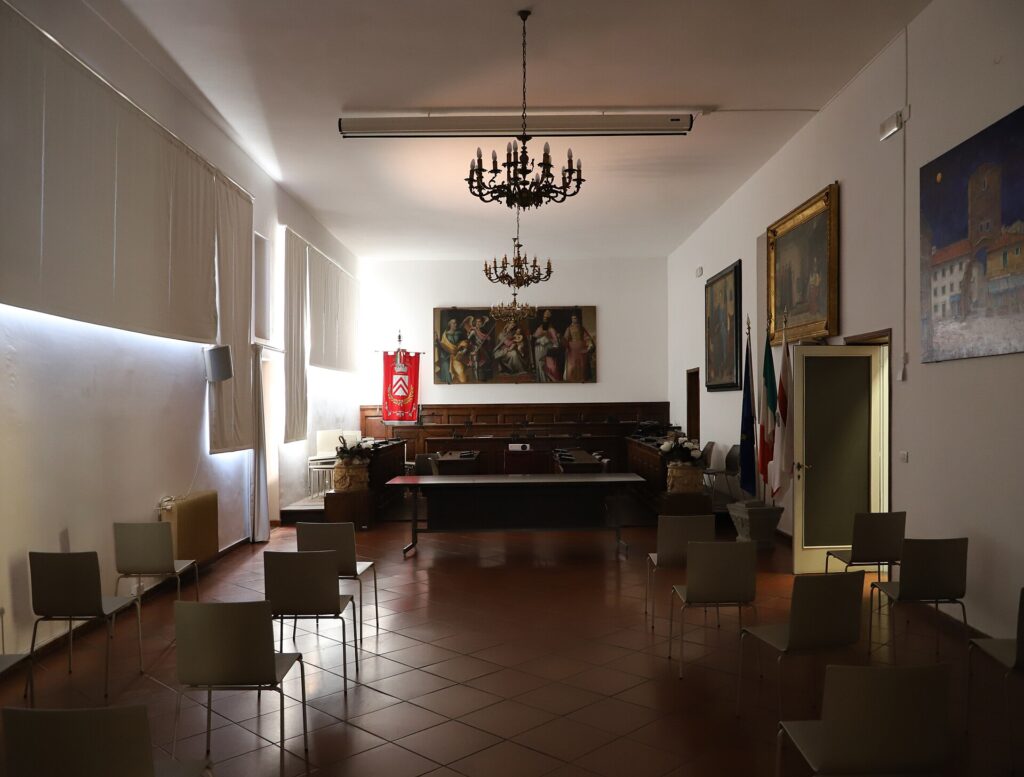
| 4. Declaration of Intention | The marriage office at the town hall | You present your documents and declare your intention to marry |
| 5. Ceremony and apostille | Town hall, then the Prefettura | You marry, then obtain an apostille on the marriage certificate |
The U.S. Embassy lists seven locations that provide notarial services in Italy: Milan, Genoa, Venice, Florence, Rome, Naples and Palermo. The apostille on the marriage certificate after the wedding is described in the embassy's guide for the Rome consular district.
What is the Dichiarazione Giurata?
The Dichiarazione Giurata is a sworn declaration that there is no legal reason why you cannot marry. The U.S. Embassy describes it as an affidavit "sworn to before a U.S. consular officer accredited in Italy, stating that there is no legal impediment to your marriage according to the laws of the U.S. state in which you are a resident."
You need an appointment at the embassy or a consulate to swear it, so book as soon as your travel dates are fixed. After that, the declaration is taken to the local Prefettura to be legalized before you present it at the town hall.
What is the Atto Notorio?
The Atto Notorio is a second sworn statement that some Italian town halls require in addition to the Dichiarazione Giurata. In the Rome consular district, the embassy's guidance explains that you can obtain it from the Rome court (Tribunale Ordinario) or in advance from an Italian consulate in the U.S.
Whether you need it, and where to get it, depends on the consular district and town where you marry. Getting it from an Italian consulate before you leave the U.S. can save a day in Italy.
How long do you need to be in Italy before the wedding?
Plan to arrive several working days before the wedding, because the declaration, legalization and town hall appointment all take place in Italy. Civil banns are normally posted for two consecutive weeks, but the U.S. Embassy notes that this may be waived or shortened if neither partner is Italian.
Offices are closed on weekends and public holidays, so check the calendar carefully. From 2026, October 4 is again a national holiday in Italy, as Geopop reports.
Can you have a religious wedding in Italy?
Yes. A Roman Catholic wedding in Italy is legally valid on its own, because, as the U.S. Embassy explains, "the priest will register the marriage with the civil authorities."
Non-Catholic religious ceremonies are different. The embassy notes that they need a civil ceremony first for the marriage to be legally recognized, so many couples hold a short civil ceremony and then a religious or personal celebration afterwards. For a Catholic wedding, contact your home parish early, as the Church has its own preparation requirements.
Can same-sex couples get married in Italy?
Same-sex marriage is not legal in Italy, but same-sex couples can enter a civil union. Italy's civil unions law, Law 76 of 2016, came into force on June 5, 2016, according to Wikipedia.
The U.S. Embassy publishes separate guidance for U.S. citizens entering into a civil union in Italy. Many couples also choose a symbolic ceremony in Italy, whatever their legal arrangements at home.
What is a symbolic wedding ceremony in Italy?
A symbolic ceremony is a wedding celebration with no legal effect, held wherever you like, with the legal marriage completed at home before or after the trip. It avoids Italian paperwork completely and gives you full freedom over the venue, time and style of the ceremony.
This is a popular choice for couples who want a ceremony in a vineyard, a castle courtyard or on a terrace by the sea, where a legal civil ceremony may not be possible. It also suits couples who want a celebrant to lead a personal ceremony in English.
Where can you get married in Italy?
A civil wedding takes place at a town hall or at another venue the municipality has approved, while a symbolic ceremony can be held almost anywhere. Tuscany is the most popular region for foreign couples, with Lake Como, the Amalfi Coast and Chianti as the leading hotspots, according to Il Sole 24 Ore.
For a more exclusive setting, consider Marche. The castle of Gradara is "one of the best-preserved Italian Medieval structures," according to Italia.it. Our guide to a destination wedding in Italy compares Marche with Tuscany and Lake Como.

How far in advance should you start planning?
Start at least nine months before the wedding, and earlier for peak-season dates or a specific venue. That is the timeline we recommend on our luxury wedding in Italy page.
The legal steps themselves happen close to the date, but venues, suppliers, consulate appointments and guest travel all need to be booked well ahead. Starting early also leaves time to obtain the Atto Notorio from an Italian consulate before you travel.
How can Sweet Life Italy help you get married in Italy?
Sweet Life Italy can plan your wedding in Italy from venue to guest transport, working with you on the timeline so the legal steps fit around your celebration. We plan luxury weddings in Italy, with private transport from our own chauffeur service with English-speaking drivers.
You can also extend your stay with an Italy honeymoon. Tell us about your wedding and we will start with a video call to understand your vision. The first estimate is free.
About Sweet Life Italy. Sweet Life Italy is a certified incoming tour operator and destination management company based in Castelraimondo, in the Marche region, founded by Marco and Ilaria. We design weddings, honeymoons and bespoke Italian holidays with private transport from our own chauffeur service.